

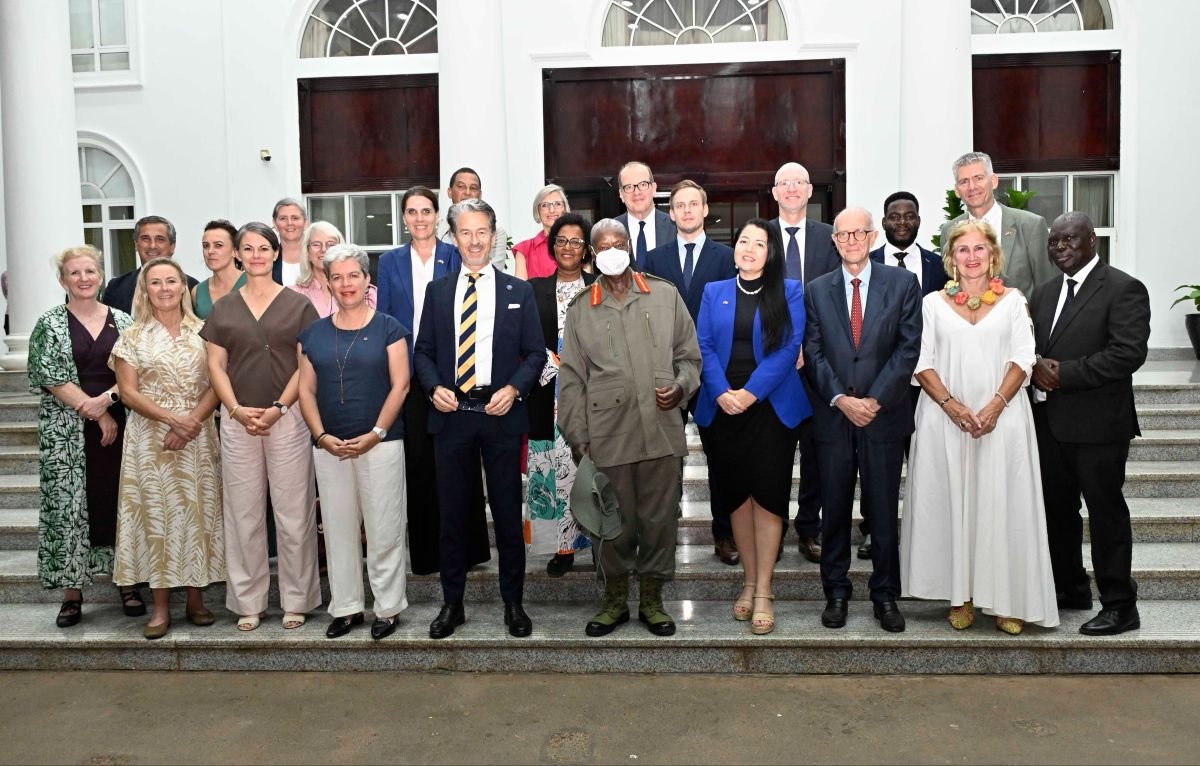
President Yoweri Kaguta Museveni has defended Uganda’s 10-year tax holiday for eligible manufacturers, saying the incentive is designed to attract investment, boost local production and create jobs rather than deprive the Government of revenue.
Museveni made the remarks after meeting European ambassadors and investors at State House Entebbe on Thursday night, where he said European investors were increasingly directing their investments towards Uganda, particularly in hydropower and other infrastructure projects.
In a statement shared on his official X account on Friday, October 23, 2026, the President said Africa’s rapidly growing population presents a major investment opportunity for European businesses seeking new markets.
“I have always told our European friends that Africa is a huge market because of its rapidly growing population. This is an opportunity we must all take advantage of,” Museveni said.
The meeting comes as Uganda seeks to attract more foreign capital into infrastructure, manufacturing and other productive sectors to support economic growth.
Museveni Explains 10-Year Tax Holiday
The President used the engagement to explain the rationale behind Uganda’s tax incentives for eligible manufacturers, arguing that encouraging businesses to invest and expand production can generate economic benefits beyond immediate corporate tax collections.
According to Museveni, the 10-year tax holiday is intended to encourage investment, increase production and create employment opportunities for Ugandans.
He argued that the Government can still collect revenue as manufacturing activity expands, workers earn more and consumers spend money in the economy.
“As our people produce and earn more, Government also collects revenue through consumer spending and income taxes,” he said.
The remarks highlight the Government’s position that tax incentives can help attract investment and stimulate economic activity, although their overall impact depends on the investments generated, the jobs created and the revenue ultimately collected.
European Investors Target Infrastructure
Museveni said he was pleased to learn that European investors were increasingly investing in Uganda, particularly in hydropower and other infrastructure projects.
Hydropower remains a strategic sector for Uganda as the country seeks to expand electricity generation to support industrialisation, commercial activity and household demand.
Investment in energy and related infrastructure is also important to manufacturers, whose operating costs and ability to expand production depend partly on reliable electricity and supporting infrastructure.
However, the President did not disclose the names of the investors who attended the meeting, the specific projects discussed or the financial value of the investments mentioned in his statement.
The extent to which the engagement will translate into new investment commitments therefore remains unclear.
Investment Incentives Under Scrutiny
Uganda’s tax incentives are intended to improve the country’s attractiveness to investors, particularly in sectors expected to generate employment, expand exports and strengthen domestic production.
However, tax holidays also raise questions about the balance between attracting new investment and protecting public revenue. Their effectiveness depends on whether the incentives encourage projects that would not otherwise have been undertaken, as well as the extent to which the resulting economic activity benefits Ugandans.
Museveni’s latest remarks signal that his Government intends to continue presenting Uganda as a major investment destination for European businesses, with a particular emphasis on infrastructure, manufacturing and the opportunities offered by Africa’s expanding consumer market.
Further details on the projects discussed at State House, including any new commitments or agreements, were not provided in the President’s statement.