
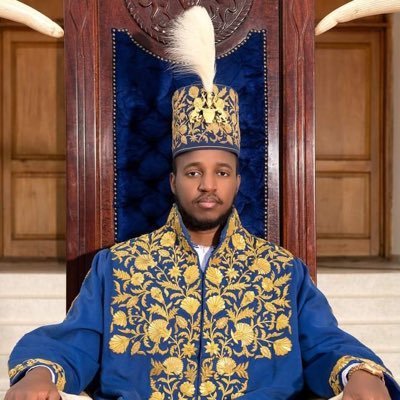
Tooro Kingdom has been plunged into mourning following the death of Omukama Oyo Nyimba Kabamba Iguru Rukidi IV, bringing to an end the extraordinary 31-year reign of a monarch who ascended one of Uganda’s oldest traditional thrones as a three-year-old child.
King Oyo, who was 34, reportedly died at about 10:00 p.m. on Thursday, August 27, 2026, while receiving medical care in the United States.
His death was announced by Tooro Kingdom Prime Minister Calvin Armstrong Rwomiire Akiiki in a message addressed to the people of Tooro, in which he described the loss as “immeasurable” for the Royal Family, the Abatooro and Uganda.
The Prime Minister called upon the people of Tooro to remain united, calm and prayerful, while announcing that the continuity of the Tooro Crown would be maintained.
He further disclosed that the late King had left behind a Prince who is expected to become his heir, although the identity of the Prince would be formally revealed at an appropriate time in accordance with Tooro traditions and customs.
The announcement came only hours after Tooro Kingdom confirmed that the monarch was in a critical condition and appealed for prayers.
The sudden deterioration ended a day of intense uncertainty after reports about the King’s health circulated widely.
Earlier, Minister Balaam Barugahara had confirmed that King Oyo was alive but unwell and receiving medical attention in the United States.
The kingdom subsequently confirmed that the King was critically ill, but did not disclose the nature of his illness or provide details about his medical condition.
The situation later turned tragic with the announcement of his death.
A King Who Began His Reign at Three
Oyo Nyimba Kabamba Iguru Rukidi IV was born on April 16, 1992, in Fort Portal.
His entry into the history books came only three years later.
On August 26, 1995, his father, Omukama Patrick David Matthew Kaboyo Rwamuhokya Olimi III, died.
The young Oyo subsequently inherited the Tooro throne on September 12, 1995, becoming one of the world’s youngest reigning monarchs.
He was only three years old.
His accession came barely a week after his father’s burial and made Oyo an international royal curiosity. Ugandan historical accounts have repeatedly noted that he became the world’s youngest reigning monarch following his enthronement.
For much of his childhood, Oyo therefore occupied a unique position: he was simultaneously a schoolboy and the reigning Omukama of Tooro.
The young monarch was supported by senior members of the Royal Family and kingdom establishment as he grew up and received his education.
His mother, Queen Mother Best Kemigisa Akiiki, became one of the most prominent figures around the young King and played a central role in his upbringing.
From Child Monarch to Adult King
Oyo’s childhood reign eventually gave way to adult leadership.
A major turning point came in April 2010 when he reached the age of 18.
At that point, he assumed full operational control of the Tooro Kingdom, marking the transition from a monarch whose affairs had necessarily been guided by senior advisers to an adult King taking a more direct role in the administration and public affairs of the cultural institution. The Daily Monitor reported that he officially took operational control upon turning 18.
His formal coronation took place on April 17, 2010, when he was 18.
The ceremony attracted national and international attention, with President Yoweri Museveni among the dignitaries who attended.
The coronation symbolised the transformation of the child king who had captured global attention in 1995 into an adult monarch assuming a more visible role in the affairs of Tooro.
His 31-Year Reign
Oyo’s reign stretched across more than three decades of Uganda’s modern history.
He became King in 1995, only a few years after Uganda’s traditional institutions had been restored.
His father, Olimi III, had been instrumental in the history of the restored Tooro monarchy before his death in 1995.
Oyo inherited the throne at a particularly important period for Uganda’s cultural institutions, which were rebuilding their public roles after years of political disruption.
His reign therefore became closely associated with the post-restoration era of the Tooro Kingdom.
By September 2025, Oyo had completed 30 years on the throne.
His 30th coronation anniversary was marked in Tooro amid celebrations involving cultural leaders, politicians and the people of the kingdom.
The milestone underscored the extraordinary length of his reign despite the fact that he was still only in his thirties.
Education and Public Life
As he grew older, Oyo pursued formal education alongside his responsibilities as monarch.
He attended schools in Uganda before continuing his studies abroad.
He eventually studied Business Management at Winchester University in the United Kingdom and graduated in 2013.
His transition into adulthood also saw him become increasingly involved in public advocacy and development issues.
Rather than restricting his role to royal ceremonies, Oyo frequently spoke about education, agriculture, technology, youth empowerment and economic development.
He encouraged institutions to explore agriculture and agribusiness as avenues for creating employment and supporting Uganda’s economic transformation.
His public activities helped give the Tooro monarchy a modern profile while maintaining its traditional identity.
A Cultural Institution Larger Than the King
The death of King Oyo is significant not simply because of the individual who has died, but because of the institution he represented.
The Tooro Kingdom traces its monarchy back more than two centuries.
The kingdom’s history identifies 1822 as the beginning of the Tooro monarchy, making it one of the region’s oldest continuing traditional institutions.
Oyo was part of the Babiito royal lineage and inherited the throne from his father.
His death therefore marks another major transition in a royal institution that has survived political upheavals, the abolition of kingdoms in the 1960s and their restoration in the 1990s.
Although Uganda’s traditional rulers do not exercise constitutional political authority, the kings remain powerful cultural symbols.
For the Abatooro, the Omukama represents heritage, identity, history and continuity.
A Day of Confusion and Grief
The circumstances surrounding Oyo’s death made Thursday one of the most dramatic days in recent Tooro history.
Reports of his death initially spread through social media, triggering anxiety among his subjects and across Uganda.
At first, Tooro Kingdom urged the public not to believe unverified reports.
The Kingdom’s Prime Minister later confirmed that Oyo was critically ill and asked people to pray for him.
Minister Balaam Barugahara similarly said the King was still alive but under medical management in the United States.
The official confirmation of his critical condition effectively ended the earlier assurances that he was in good health.
Hours later came the announcement that the monarch had died.
The rapid sequence of events left many Abatooro struggling to process the loss of a King who had been on the throne for virtually his entire life.
The Succession Begins
Perhaps the most consequential part of the Prime Minister’s announcement concerns what happens next.
Rwomiire said the continuity of the Crown is assured and disclosed that King Oyo leaves behind a Prince who will be his heir.
However, the identity of the successor will not immediately be made public.
According to the Prime Minister, the name of the Prince will be formally revealed at the appropriate time and in accordance with Tooro customs and traditions.
That announcement sets the stage for a new chapter in the history of the kingdom.
Unlike Oyo’s succession in 1995, when the world watched a three-year-old child inherit the throne after the death of his father, the next transition will occur after a monarch who spent more than three decades on the throne.
The Royal Family and kingdom authorities are expected to guide the succession process in accordance with established cultural traditions.
From a Three-Year-Old King to a National Cultural Figure
Oyo’s life was inseparable from the crown.
He did not become King after reaching adulthood. He did not inherit the throne after building a career elsewhere.
He became a monarch before he was old enough to understand the responsibilities attached to the title.
Over the following three decades, Uganda watched him grow from a royal child into a university graduate and adult cultural leader.
His reign spanned his entire conscious life.
For the people of Tooro, that made Oyo more than a traditional ruler. For an entire generation of Abatooro, he was the only Omukama they had ever known.
For younger people, he was the face of Tooro’s monarchy.
For older generations, he represented the continuation of the royal institution after its restoration.
The End of an Extraordinary Chapter
King Oyo’s death at 34 closes one of the most unusual chapters in Uganda’s modern royal history.
He became King at three.
He was formally crowned at 18.
He took full operational control of the kingdom as an adult.
He marked 30 years on the throne in 2025.
And now, at 34, he leaves behind a kingdom preparing for another succession.
His reign was shaped by an unusual combination of tradition and modernity: a centuries-old institution led by a monarch who grew up in the era of smartphones, social media, global education and rapidly changing Ugandan society.
The Tooro Kingdom now faces the difficult task of mourning its King while preparing for the continuation of the Crown.
The Prime Minister’s call for calm and unity is likely to be particularly important in the days ahead as the Royal Family, kingdom authorities and the Abatooro begin the process of funeral arrangements and succession.
For three decades, the name Oyo was synonymous with the Tooro throne.
That era has now come to an end.
Omukama Atulize. Enkuba Etutire.