
Uganda’s dairy industry could be set for another major boost after Egyptian investors expressed interest in establishing a modern milk processing facility in Ngoma, a move that aligns with the government’s drive to increase value addition, create jobs and expand export markets for agricultural products.
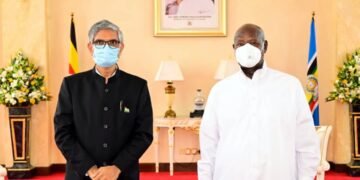
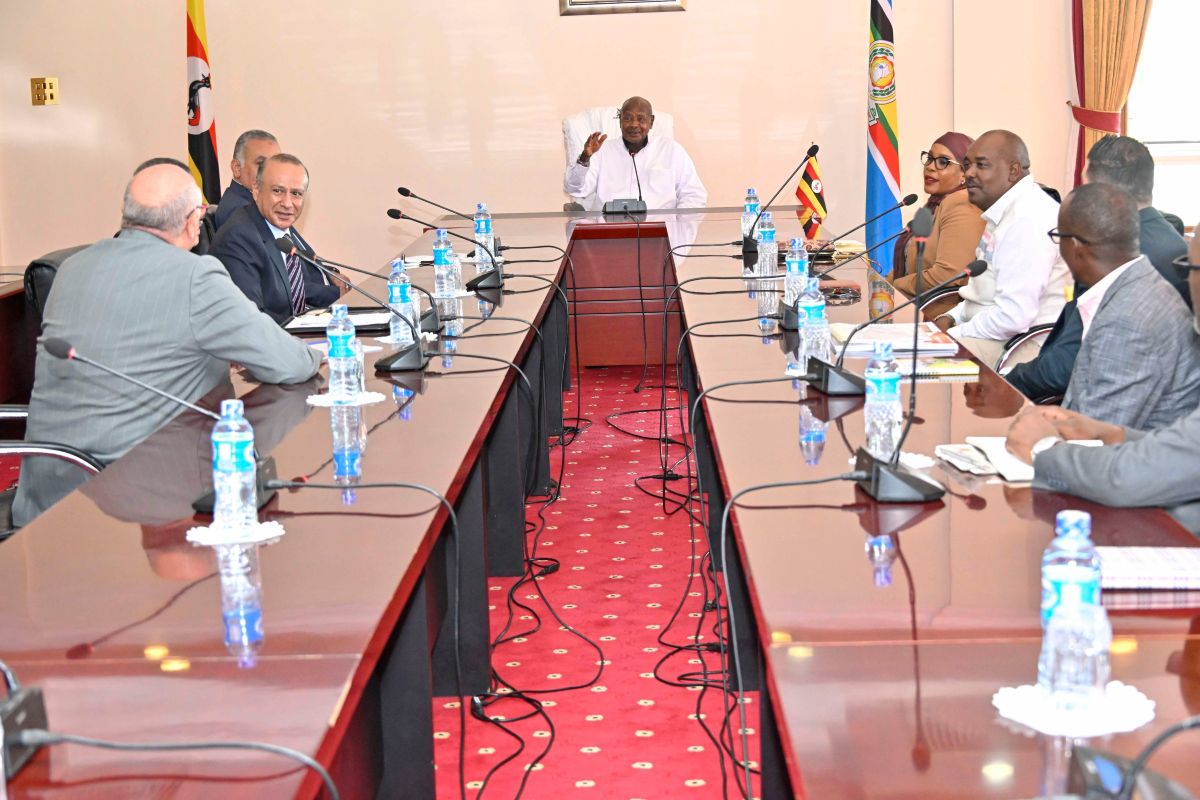
The development was announced by President Yoweri Kaguta Museveni following a meeting with a delegation of Egyptian investors at State House Entebbe on Thursday, where discussions centered on investment opportunities in Uganda’s fast-growing dairy sector.
According to the President, the investors presented proposals aimed at partnering with Uganda in milk processing and other areas of the dairy value chain, with a particular focus on setting up a modern processing facility capable of handling some of the country’s growing milk surplus.
“Today, I met Egyptian investors at State House, Entebbe, who shared proposals to partner with Uganda in the dairy sector, including establishing a modern milk processing facility in Ngoma,” Museveni said.
The President noted that Uganda’s dairy industry has expanded significantly over the years and now produces approximately 5.4 billion litres of milk annually, making it one of the largest milk producers on the African continent.
“I told them that Uganda now produces about 5.4 billion litres of milk annually, with a surplus available for processing and export. Our focus is on value addition, quality improvement and expanding export markets. I welcome them and wish them good luck,” he added.
The proposed investment comes at a time when Uganda is actively seeking to attract foreign direct investment into agriculture and agro-industrialization, sectors that government officials consider critical for economic transformation and job creation.
A Growing Dairy Industry
Uganda’s dairy sector has undergone a remarkable transformation over the past three decades. Once dominated by subsistence livestock keeping, the industry has evolved into a multi-billion-shilling enterprise supported by commercial farms, milk collection centers, processors and exporters.
Government investments in veterinary services, improved cattle breeds, water for production and rural infrastructure have contributed to a steady increase in milk production. The country’s cattle corridor, stretching from the southwest through central Uganda and into parts of northern Uganda, remains the backbone of the dairy industry.
Today, Uganda produces far more milk than the domestic market can consume, creating opportunities for exports and value-added processing. However, the rapid increase in production has also exposed challenges related to storage, transportation and processing capacity.
Industry stakeholders have repeatedly warned that unless processing capacity expands in line with production growth, farmers could continue experiencing fluctuations in milk prices, especially during periods of peak production.
The planned milk processing facility in Ngoma could therefore play a significant role in absorbing excess milk, stabilizing the market and creating additional demand for dairy farmers.
Value Addition at the Center of Government Policy
The proposed investment also fits squarely within the government’s long-standing policy of promoting value addition before export.
For years, Museveni has argued that Uganda loses substantial income by exporting raw agricultural products rather than processed goods. The government has therefore prioritized investments in agro-processing industries capable of transforming raw materials into finished products with higher market value.
In the dairy sector, value addition includes the production of powdered milk, butter, cheese, yoghurt, ghee and other dairy products that can be sold in regional and international markets.
Officials believe that increasing processing capacity will help Uganda earn more foreign exchange while creating employment opportunities for young people in manufacturing, logistics, marketing and related industries.
A modern processing plant would also strengthen quality assurance systems and help Uganda meet international standards required in export markets.
Expanding Export Opportunities
Uganda’s dairy products are already exported to several countries within the East African Community and beyond. Markets in Kenya, South Sudan, Rwanda, the Democratic Republic of Congo and parts of the Middle East have become increasingly important destinations for Ugandan milk products.
However, industry experts say the country still has significant untapped export potential.
With global demand for dairy products continuing to rise, Uganda’s large livestock population and favorable climate place it in a strong position to become a major dairy exporter. Achieving that goal, however, requires continued investment in processing facilities, cold chain infrastructure, quality control systems and market development.
The entry of Egyptian investors could therefore provide not only capital but also technical expertise and access to new markets in North Africa and the Middle East.
Egypt is one of Africa’s largest economies and has growing demand for processed food products. Stronger agricultural and trade ties between Kampala and Cairo could open new opportunities for Ugandan exporters.
Benefits for Farmers and Local Communities
If implemented, the Ngoma processing plant is expected to generate benefits across the dairy value chain.
For farmers, additional processing capacity would create a more reliable market for milk, reducing the risk of spoilage and helping stabilize farm-gate prices. Increased demand for raw milk could also encourage farmers to invest in better breeds and improved production practices.
The project could also create direct and indirect employment opportunities during both construction and operation. Workers would be needed in processing, quality control, transportation, packaging and administration, while local businesses could benefit from increased economic activity.
Furthermore, the facility could stimulate growth in supporting sectors such as animal feeds, veterinary services, refrigeration and logistics.
Strengthening Uganda-Egypt Economic Relations
The meeting between Museveni and the Egyptian investors reflects growing economic engagement between Uganda and Egypt, two countries that have increasingly sought to strengthen cooperation in trade, agriculture, infrastructure and investment.
In recent years, Uganda has intensified efforts to position itself as a regional investment destination by highlighting its strategic location, growing consumer market and abundant natural resources.
Government officials have consistently encouraged foreign investors to establish industries that utilize locally available raw materials rather than focusing solely on import-based businesses.
The proposed dairy investment appears to align with that vision, leveraging Uganda’s abundant milk supply while contributing to industrialization and export growth.
While details regarding the size of the investment, financing arrangements and implementation timelines have not yet been disclosed, the proposal signals growing international confidence in Uganda’s agricultural potential.
For a country seeking to transform its economy through industrialization and value addition, the planned milk processing facility represents more than just another factory. It is part of a broader strategy to convert Uganda’s agricultural abundance into jobs, exports and sustainable economic growth.
Should the project move from proposal to implementation, it could become one of the latest milestones in Uganda’s ambition to establish itself as a leading dairy producer and processor on the African continent.