

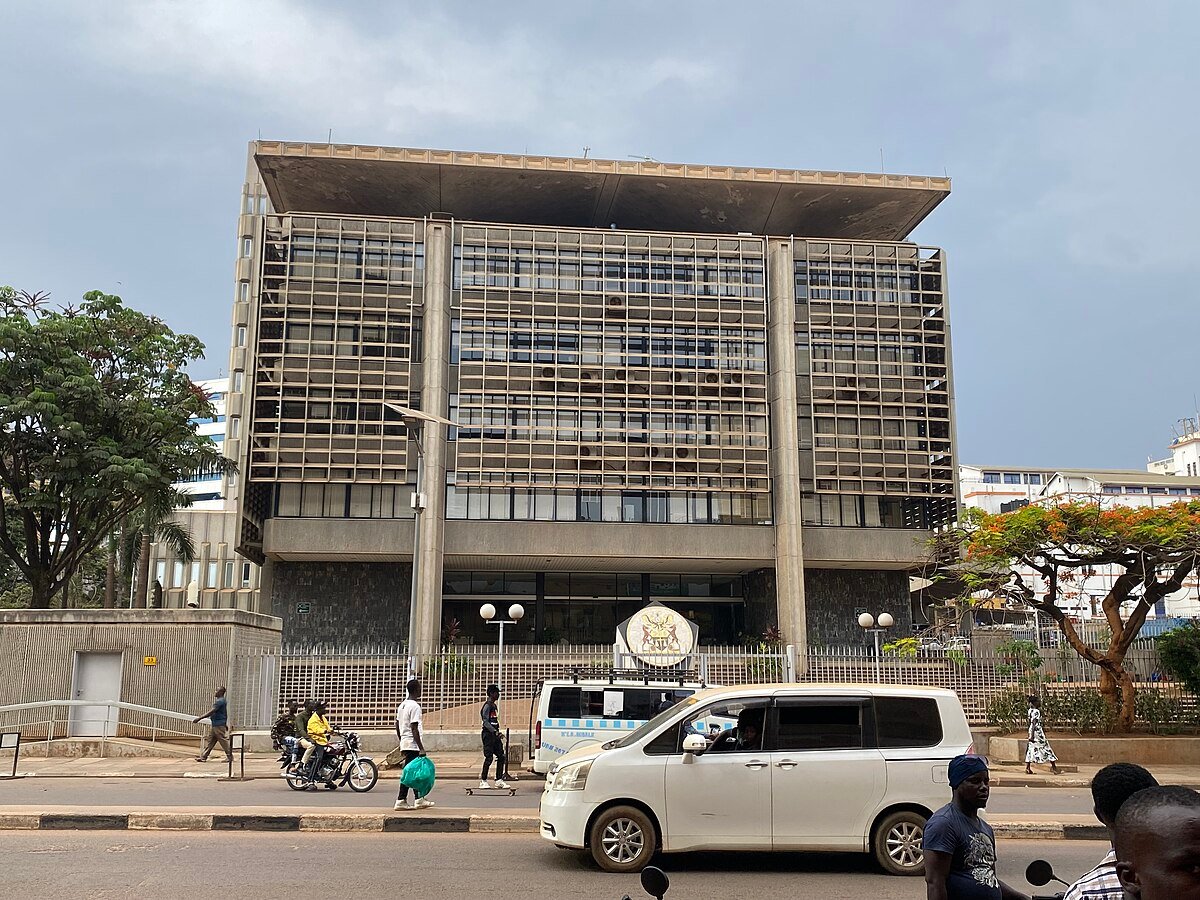
KAMPALA – The Bank of Uganda (BoU) has unveiled sweeping reforms aimed at reducing reliance on cash transactions and accelerating the country’s transition to digital payments, announcing lower interbank cheque value limits and introducing new over-the-counter (OTC) cash withdrawal caps for individuals and businesses.
The changes, communicated in a circular dated May 29, 2026 and addressed to chief executive officers of commercial banks, credit institutions and microfinance deposit-taking institutions, form part of the central bank’s broader e-payments strategy designed to support Uganda’s national digitization agenda and promote a cash-lite economy.
Under the new framework, the value limits for interbank cheques will be reduced by 50 percent across all major currencies. The maximum value for a Uganda shilling interbank cheque will fall from UGX10 million to UGX5 million.
Dollar-denominated cheques will be capped at USD1,375, down from USD2,750, while euro cheques will be limited to EUR1,125 from EUR2,250. The limit for British pound cheques will be reduced from GBP2,200 to GBP1,100, and Kenyan shilling cheques will be capped at KES150,000, down from KES300,000.
The central bank says the measures are intended to encourage customers and businesses to migrate from traditional paper-based payment instruments to more secure and efficient electronic payment channels.
In what is expected to be one of the most significant changes to cash transactions in recent years, BoU has also introduced daily and weekly limits on over-the-counter cash withdrawals.
Individual account holders will be restricted to a maximum OTC withdrawal of UGX50 million per day and UGX250 million per week.
Corporate and business account holders will face a daily cap of UGX500 million and a weekly limit of UGX2.5 billion.
The new regulations will take effect on January 1, 2027, giving financial institutions and customers a six-month transition period to adjust to the changes and clear any existing payment instruments.
The central bank argues that the reforms are consistent with its long-term vision of building a modern, digital-first financial ecosystem.
By reducing dependence on physical cash and cheques, authorities hope to improve payment efficiency, strengthen financial transparency, lower transaction costs and enhance the security of financial transactions.
Recognizing that some sectors of the economy still rely heavily on cash, the Bank of Uganda has directed supervised financial institutions to implement robust customer risk-profiling systems to determine appropriate withdrawal limits for different customers.
According to the circular, banks and other supervised financial institutions will be required to maintain regularly updated risk-based customer profiles. These profiles will guide the setting and adjustment of cash withdrawal limits based on individual customer circumstances, transaction patterns and due diligence assessments.
The central bank also left room for flexibility in exceptional circumstances. Financial institutions will be permitted to seek formal approval from the Bank of Uganda for waivers of the withdrawal limits in cases involving specific transactions or sectors.
Such exemptions, however, will only be granted after comprehensive risk assessments and customer due diligence have been conducted.
Agriculture and artisanal mining were specifically highlighted as sectors that continue to depend significantly on cash transactions. The central bank acknowledged the realities facing such industries and indicated that special consideration may be given where justified.
To facilitate the transition, the Bank of Uganda has directed financial institutions to actively promote alternative payment channels. Banks are expected to guide customers toward digital solutions such as Real-Time Gross Settlement (RTGS) systems, mobile banking platforms and internet banking services.
Financial institutions will also be required to demonstrate that the digital alternatives they recommend are practical, accessible and effective for their customers. They are expected to make these channels readily available and provide sufficient support to encourage wider adoption.
The central bank plans to undertake extensive public awareness campaigns during the six-month transition period in collaboration with industry stakeholders. The sensitization effort will seek to educate businesses, individuals and other stakeholders about the new rules and the digital payment options available to them.
The reforms signal one of the strongest policy moves yet by the Bank of Uganda to reshape payment behavior in the economy.
If successfully implemented, the measures are expected to accelerate the country’s shift toward electronic transactions while reducing the volume of high-value cash withdrawals and cheque-based payments.
The Bank of Uganda further indicated that the cash withdrawal limits may be reviewed periodically in consultation with industry stakeholders as the financial sector continues to evolve and digital payment adoption increases across the country.