
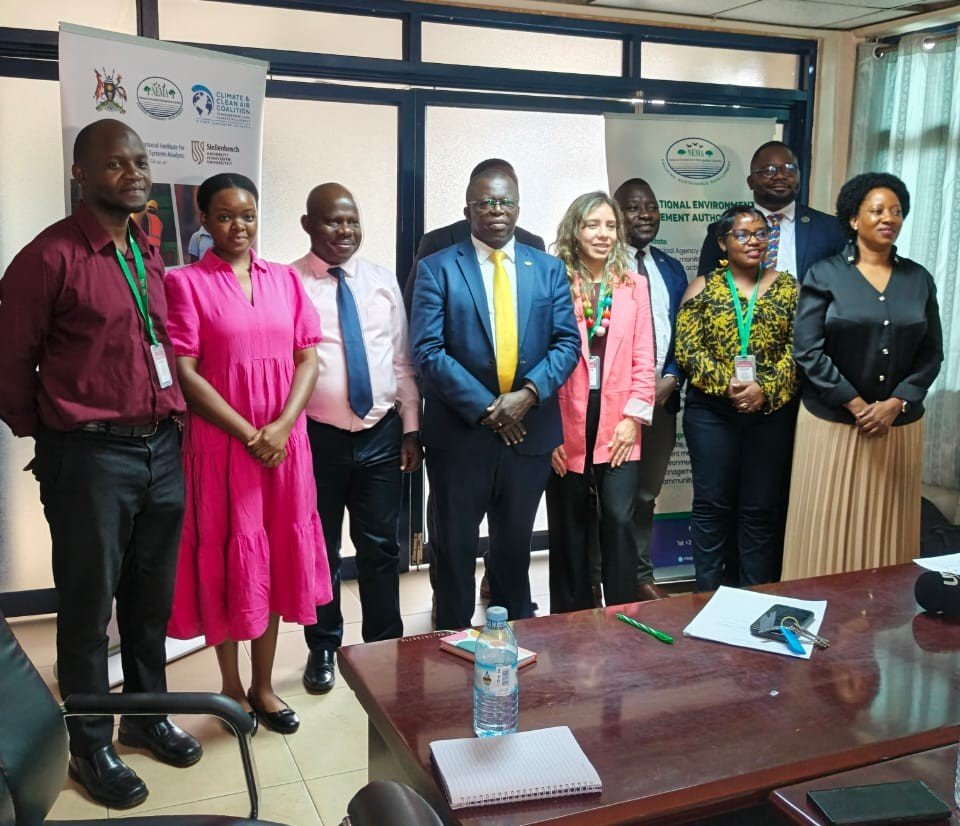
National Environment Management Authority (NEMA) has stepped up efforts to confront Uganda’s growing waste challenge, convening a high-level stakeholder meeting in Kampala to fast-track a national strategy on organic waste management.
The meeting, held at NEMA House, brought together government ministries, city authorities, local governments, and international partners in what officials described as a decisive push to streamline how the country handles its largest waste stream—organic waste.
NEMA said the review of the Draft National Strategy for Organic Waste Management is aimed at tightening coordination, strengthening enforcement, and ensuring compliance with environmental laws across all levels of government.
Although day-to-day waste collection and disposal remains the responsibility of local governments, NEMA emphasized its central role in shaping policy, setting standards, and supervising implementation nationwide.
Speaking during the meeting, Acting Executive Director Francis Ogwal underscored the urgency of reform, noting that poor waste handling continues to threaten public health, environmental safety, and climate resilience.
He commended stakeholders for their input, describing the strategy as a critical tool in addressing municipal organic waste, which accounts for the bulk of Uganda’s waste output.
Strategy Backed by Global Partners
The development of the strategy has been spearheaded by NEMA with support from key international organizations, including the Climate and Clean Air Coalition, the International Institute for Applied Systems Analysis, Stellenbosch University, and the Africa Centre for Clean Air.
Officials revealed that several milestones have already been achieved under the initiative, including:
- A draft National Strategy for Organic Waste Management
- A National Organic Waste Sorting Manual
- Capacity-building workshops and webinars for stakeholders
The meeting also featured technical presentations, stakeholder discussions, and a live demonstration of an Organic Waste Management application—highlighting the growing role of technology in modern waste systems.
Regulations to Drive Enforcement
NEMA pointed to the National Environment (Waste Management) Regulations, 2020 as the legal backbone guiding reforms. These regulations mandate waste segregation at source, licensing of waste handlers, and stricter control of both hazardous and non-hazardous waste streams.
They also promote sustainable solutions such as composting, biogas production, material recovery facilities, and sanitary landfills, while advancing Extended Producer Responsibility to hold manufacturers accountable for post-consumer waste.
Beyond the Project Phase
Despite the formal project phase concluding in February, NEMA signaled that its involvement is far from over. The authority pledged continued oversight, coordination, and technical guidance to ensure the strategy is effectively rolled out nationwide.
The renewed push comes amid increasing pressure on urban authorities grappling with overflowing landfills and poor waste segregation practices—issues that have long plagued cities like Kampala.
With stakeholders now aligned and a national framework taking shape, NEMA says Uganda is on course to build a more sustainable, efficient, and environmentally sound waste management system.