


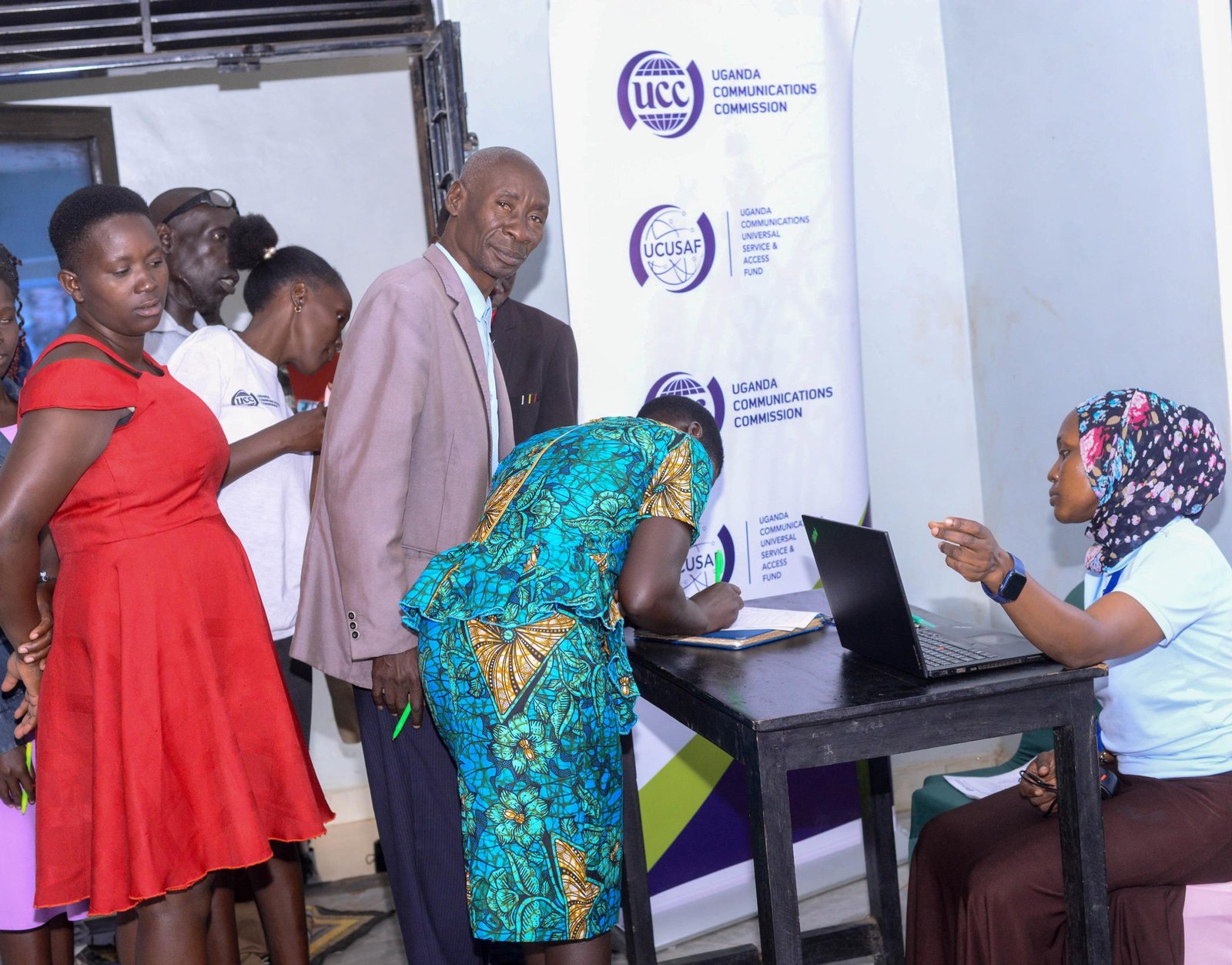
The Uganda Communications Commission (UCC), in partnership with Eight Tech Consults Ltd, has officially launched the second phase of a nationwide digital skilling programme aimed at transforming smallholder farming through technology.
The initiative, funded under the Uganda Communications Universal Service and Access Fund, is set to equip 2,140 farmers across 24 districts with practical digital skills to enhance productivity, improve market access, and deepen digital inclusion.
This latest rollout builds on the success of Phase I, which saw 3,116 farmers trained across 26 districts, marking a significant step in bridging the digital divide within Uganda’s agricultural sector.
Driving Digital Inclusion in Agriculture
The Digital Skilling for Farmers Programme is aligned with Uganda’s broader development agenda, including the National Development Plan III and strategies by the Ministry of Agriculture, Animal Industry and Fisheries. It focuses on equipping farmers with essential ICT skills to navigate an increasingly digital economy.
According to Dr. Drake Patrick Mirembe, Chief Technology Officer at Eight Tech Consults, the programme is designed to enable farmers to leverage innovations from both government and private sector players.
“The objective is to impart digital transversal skills that will help farmers harness innovation to improve efficiency and productivity,” he noted.
Nationwide Reach
The programme will be implemented in two phases between February and May 2026, covering districts across Northern, Eastern, Western, and Central Uganda. Each phase targets 1,070 farmers, ensuring balanced regional inclusion.
Districts such as Kakumiro, Busia, Kisoro, and Bundibugyo are part of the first rollout, while areas including Kiryandongo, Soroti, Mubende, and Rakai will be covered in the second phase.
Hands-On, Community-Based Training

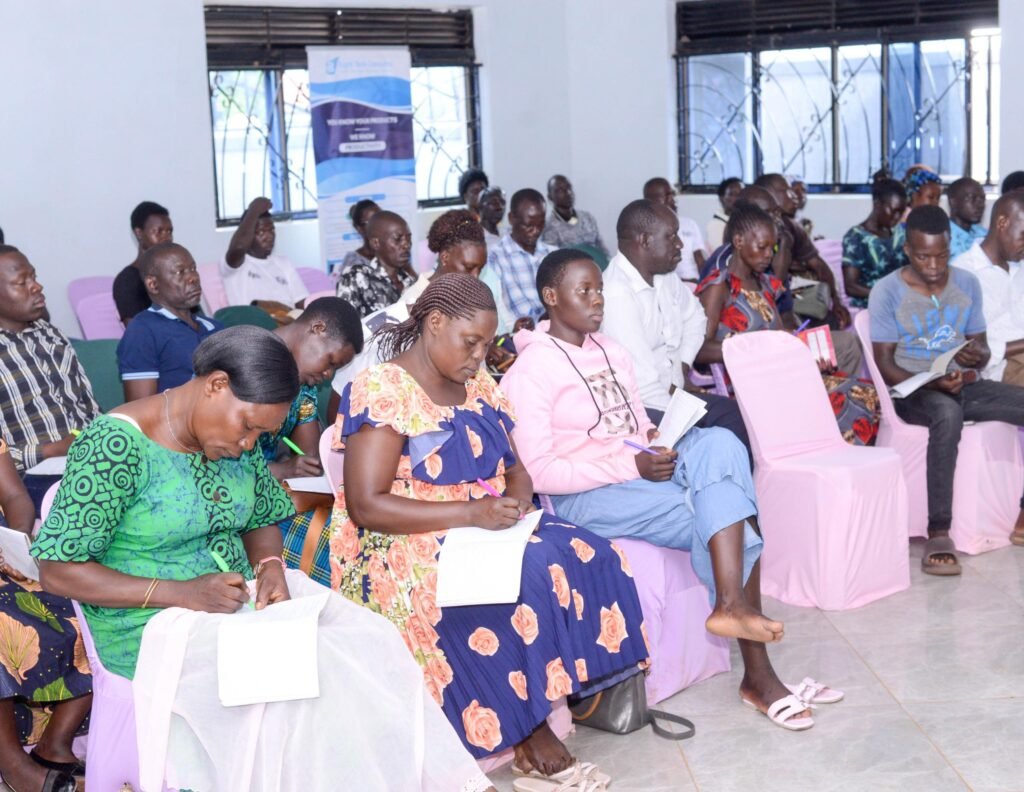
The initiative adopts a grassroots, community-integrated approach. Training sessions will run for five days in each district, delivered by local trainers and Community Change Agents using localized curricula in languages including Luganda, Runyankore-Rukiga, Luo, and Ateso.
Farmers will undergo a 30-hour digital literacy course aligned with global ICT standards, covering:
- Internet use and online navigation
- Mobile money safety and digital financial literacy
- Access to e-government services
- Use of agricultural applications
- Cybersecurity awareness
Participants will also benefit from field visits to observe real-world applications of digital tools in farming, as well as post-training support through ICT Public Access Centres supported by UCC.
Strengthening Farmer Networks
The programme is implemented in collaboration with key agricultural and research institutions, including the Uganda National Farmers Federation, National Agricultural Research Organization, and the Makerere University Regional Centre for Crop Improvement.
Other partners such as COMFARNET and WOUGNET are also playing a critical role in mobilizing farmer communities and ensuring sustainability.
Project Manager Fiona Nambogo emphasized the importance of inclusivity.
“Our goal is to engineer a digital ecosystem that works with the realities of smallholder farmers,” she said.
Impact on the Ground
Early feedback from participants highlights the programme’s transformative potential.
A farmer from Bugweri District noted that the training has enabled her to access vital agricultural information directly from her phone, while trainers report increased engagement with digital platforms for marketing farm produce.
Looking Ahead
Upon completion, the programme is expected to significantly improve farmers’ access to information, digital markets, and government services, while strengthening linkages between rural communities and Uganda’s growing digital economy.
It will also establish sustainable, community-based digital learning structures and generate a comprehensive evaluation report to inform future interventions.
As Uganda accelerates its digital transformation agenda, initiatives like this are positioning smallholder farmers at the center of innovation, ensuring that no one is left behind in the digital age.