
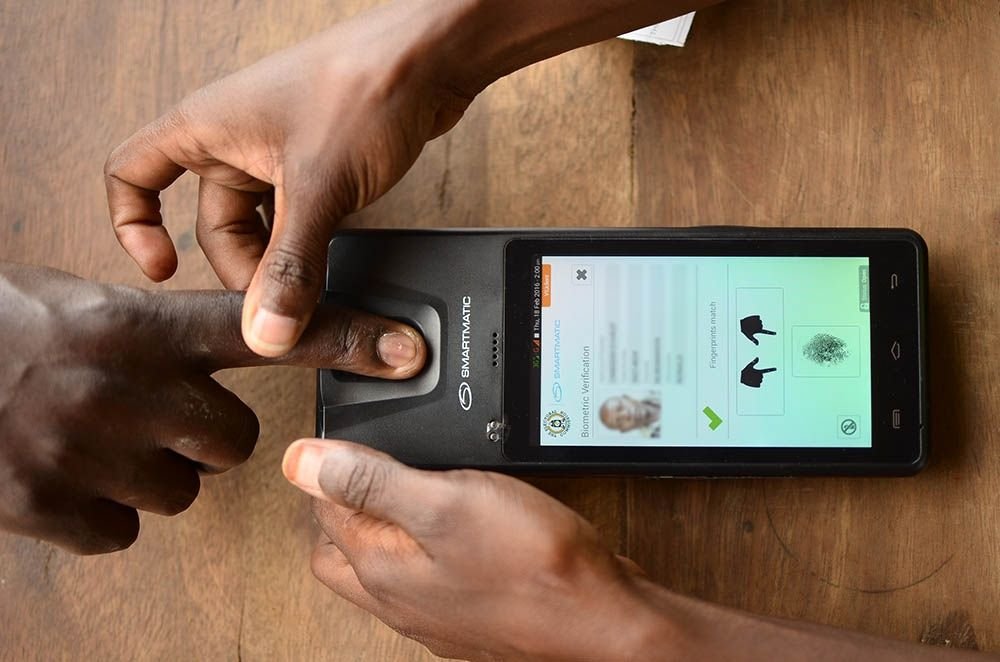
Security agencies have launched an in-depth investigation into the widespread failure of biometric voter verification kits (BVVKs) that disrupted voting during last week’s presidential and parliamentary elections, delaying the exercise at thousands of polling stations across the country.
This website has learnt that the probe is being jointly conducted by the Criminal Investigations Directorate (CID) of Police, the Internal Security Organisation (ISO) and other sister agencies, following a directive issued by President Yoweri Museveni on January 15, 2026.
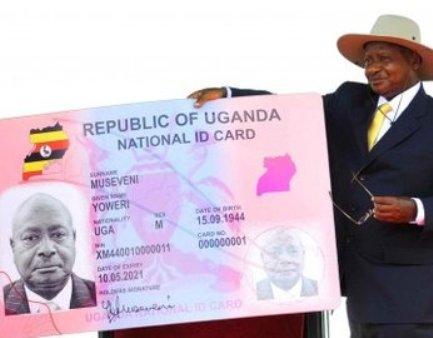
The President ordered the investigations shortly after casting his vote at Kaaro polling station in Kiruhura district, where he expressed anger over the malfunctioning of the voter verification machines nationwide.
“Was this deliberate? We are going to check that,” Museveni said, announcing formal inquiries into the failure of the BVVKs.
Security sources say the President was “incensed” by the scale of the failure, prompting an urgent and wide-ranging investigation aimed at establishing whether the glitches were accidental, a result of incompetence, or the product of deliberate sabotage.
According to sources familiar with the probe, investigators are examining several possible causes, including attempted hacking of the Electoral Commission (EC) systems, flaws in the procurement process, and the Commission’s internal information technology capacity.
“There are questions about whether the EC had the ability to troubleshoot the machines in real time,” a source said.
The investigations are also focusing on the recruitment of BVVK operators after it emerged that some of those deployed were not registered voters at the polling stations where they were assigned, making it impossible for them to log into the machines.
“We are learning that BVVK operators were required to be registered voters at the specific polling stations where they worked. However, some of those recruited were deployed outside their areas and could not log in,” the source said.
The EC procured the biometric kits from Simi Valley Technologies, a Chinese firm, at a cost of approximately shs50 billion.
Security sources confirmed that President Museveni has since held several meetings with EC officials to establish why polling officials at over 50,000 polling stations appeared ill-prepared to operate the technology.
A senior EC commissioner, who declined to be named due to the sensitivity of the matter, said preliminary internal assessments point to poor preparation by the service provider and inadequate training of election officials.
The commissioner also blamed a last-minute change in login protocols by a senior EC IT officer, a decision that may have fatally disrupted the system.
Documents seen show that training of trainers on the use of the BVVKs was conducted between December 15 and 19, while training for most election officials took place on January 8, just six days before polling day.
“People were not given enough time to properly engage with the machines. The training was simply insufficient,” the commissioner said.
Sources further revealed that panic set in within the EC on January 14, prompting a last-minute emergency training for returning officers, presiding officers and BVVK operators, after it was discovered that personnel deployed outside their districts would not be recognised by the system’s login protocols.
On the same day, an EC IT officer reportedly instructed presiding officers to abandon the use of national identity cards and voter location slips for login, and instead rely solely on new QR codes generated by the EC IT department. This sudden shift, according to insiders, effectively reset the entire verification process on the eve of the election.
With an anticipated nationwide internet shutdown, returning officers were forced to download voter data using the new QR codes. However, only 12 districts—including Sheema, Rubirizi, Kapchorwa, Bulambuli, Sironko, Namisindwa and Bukwo—successfully implemented the new system, allowing biometric verification to proceed normally.
In most other districts, the machines failed to function, forcing the EC to resort to manual voter registers under powers granted by the Electoral Commission Act to avoid disenfranchising voters.
The BVVK failures delayed the start of voting—scheduled for 7am to 4pm—by up to four hours at many polling stations, prompting the EC to extend voting time by at least one hour. Reports of non-functional machines were widespread in districts including Jinja, Wakiso, Mukono, Masaka and Gulu.
During a media demonstration in December, the EC had showcased a seamless biometric verification process involving scanning a voter’s QR code from a national ID or voter slip, followed by fingerprint or facial recognition to confirm identity and voting status. That system, however, collapsed on polling day in much of the country.
Sources say President Museveni has personally questioned several EC officers over the last-minute protocol changes, which he views as a key trigger for the chaos.
EC spokesperson Julius Mucunguzi said he was unaware of any ongoing investigations.
“When elections are still ongoing, we have not finished the process. I suspect those investigations will come later. For now, I have no information,” Mucunguzi said.
Asked whether the same kits would be used in subsequent elections, he said the Commission had ensured that systems were in place to verify voters and allow voting to proceed.
The failure of the BVVK machines is not unprecedented. Similar technical breakdowns were reported during the 2021 elections, when biometric verification also failed in many polling stations nationwide.
In his January 15 address, Museveni revealed that some EC officials had delayed uploading the biodata of BVVK operators, rendering the machines unusable.
“Some of them had not sent their biodata even by morning, others were sending it at 9am. Was this deliberate? We are going to check that,” the President said.
Investigations are expected to continue as security agencies work to determine accountability for what has emerged as one of the most significant technological failures in Uganda’s electoral history.