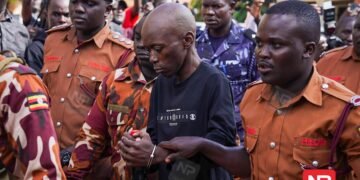

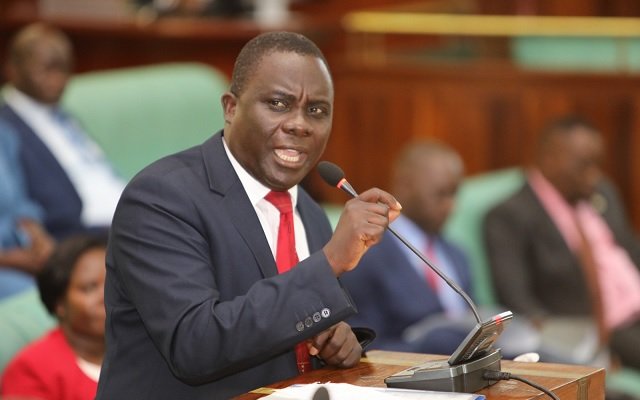
Police have confirmed the arrest of Butambala County opposition lawmaker Muhammad Muwanga Kivumbi, days after President Yoweri Museveni publicly accused him of backing violent, panga-wielding attacks linked to post-election unrest.
“The Uganda Police Force would like to confirm the arrest of the Butambala County legislator, Muhammad Muwanga Kivumbi. He is currently in police custody and will be arraigned before court in due course,” Katonga regional police spokesperson Lydia Tumushabe said in a brief statement posted on X on Thursday.
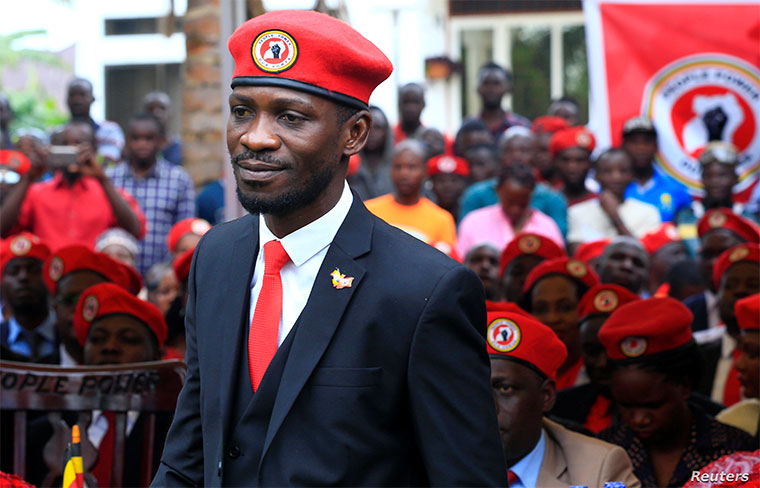
Kivumbi’s arrest comes amid heightened political tension following last week’s General Election and growing concern over the treatment of opposition figures. The National Unity Platform (NUP) leader, Robert Kyagulanyi—popularly known as Bobi Wine—has alleged that hundreds of party supporters and two senior officials have been forcibly disappeared in recent days, claims authorities have not publicly addressed.
The arrest follows sharp accusations by President Museveni during a victory address on Sunday, in which he alleged that sections of the opposition, including Kivumbi, plotted coordinated attacks on polling stations after losing parliamentary races.
Speaking from his Rwakitura residence in Kiruhura District, Museveni claimed that after Kivumbi—who also serves as NUP’s Deputy President for Central Uganda—lost the Butambala County contest, groups armed with pangas attempted to carry out violent attacks. He said security forces shot dead seven people during the incident.
“What these people were planning is what happened in Butambala with Kivumbi. They were planning to do it all over,” Museveni said, adding that intelligence agencies had warned of similar plots in other areas.
He further claimed that briefings at State Lodge Nakasero on January 13 had outlined the alleged plans. “Of course we were ready to deal with them decisively,” Museveni told senior ruling party officials and religious leaders.
Kivumbi was defeated by former journalist-turned-politician Eriasa Mukiibi in one of the most closely watched parliamentary races.
In response, Kivumbi has strongly denied the accusations. In a video shared on social media on Saturday, he rejected Museveni’s account and accused security forces of using excessive force. The footage showed bullet-riddled garage doors and shattered windows at what he said were his premises.
“Out of panic, they carried away bodies to justify their rhetoric that they had killed them away from here,” Kivumbi said, claiming that nearly 10 of his supporters were killed.
Despite the denial, Museveni doubled down on his claims on Sunday, issuing a warning to opposition figures. “So, all the traitors… this is free advice from me that stop what you’re doing because we know everything and you will not do it. Either peacefully or unpeacefully, we shall maintain peace in Uganda,” he said.
The president also renewed allegations that some opposition actors were linked to foreign groups seeking to destabilize Uganda, including organizations he accused of promoting homosexuality.
Bobi Wine has dismissed Museveni’s accusations, saying the president is acting on flawed intelligence. “I don’t look at Gen Museveni with anger. I look at him with pity,” Kyagulanyi said in a New Year address on January 1. “By his age, he is being fed fake intelligence.”
Echoes of past cases
Kivumbi’s arrest has revived memories of the previous election cycle, when former MPs Muhammad Ssegirinya and Allan Ssewanyana were detained for more than 500 days on murder and terrorism charges linked to deadly panga violence in central Uganda. Ssegirinya later died, and the state dropped charges against him in March 2025, while Ssewanyana lost his seat in the January 15 election.
The Electoral Commission has declared Museveni winner of the January 15 presidential poll with 71.65 percent, extending his rule to nearly four decades. The election was conducted under an internet blackout and was marked by allegations of irregularities, biometric voter verification failures and heavy security deployment.
Museveni’s new term is due to begin in May 2026 if the results announced by EC chairperson Simon Byabakama stand, pending a court challenge.