
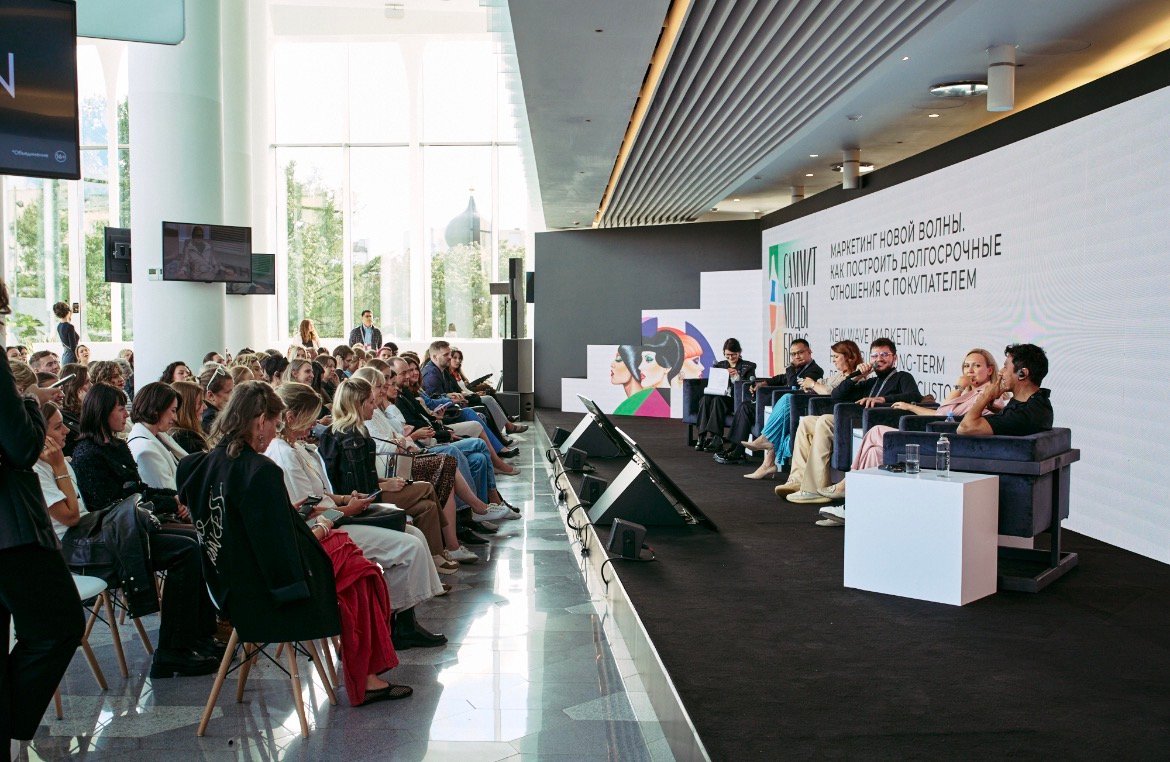
The BRICS+ Fashion Summit recently concluded in Moscow, Russia, after attracting thousands of visitors to the Zaryadye Concert Hall in what has been described as one of the most inclusive global fashion gatherings in recent years.
The high-profile event brought together heads of fashion associations, renowned designers, industry executives, professors from leading educational institutions, and other fashion experts from 65 countries, representing nearly 33 percent of the world’s population.
Participating countries spanned across all continents and included Argentina, Brazil, China, India, Russia, South Africa, Uganda, Kenya, Nigeria, Ghana, Ethiopia, Tanzania, Egypt, the Democratic Republic of the Congo, the United States, France, Italy, Spain, the Netherlands, Saudi Arabia, the United Arab Emirates, Türkiye, Indonesia, Pakistan, Bangladesh, Malaysia, Mexico, and several others from Africa, Asia, Latin America, Europe, and the Middle East.
The Summit’s robust business programme featured more than 250 speakers from Asia, Africa, the Middle East, Latin America, and the Commonwealth of Independent States (CIS), engaging participants across 42 sessions. Two major plenary discussions anchored the programme: “Fashion 360°. Development of Related Industries” and “Protectionism or Free Trade: Should National Clothing Markets Be Protected?” These sessions examined global fashion value chains, sustainability, trade policies, and opportunities for cross-border collaboration.
Beyond policy and business dialogue, culture took centre stage through the “Native Motifs” exhibition, one of the Summit’s key highlights. The exhibition showcased over 70 fashion looks curated from 13 Russian cities, celebrating traditional attire from the Russian North, Central Russia, Tatarstan, Bashkortostan, the Urals, and indigenous communities from regions including Yakutia, Tuva, Dagestan, Kabardino-Balkaria, and the Old Believers. The exhibition underscored the role of fashion in preserving heritage while inspiring contemporary design.
The runway programme further amplified the Summit’s international character, featuring designers and brands from 10 countries, namely Armenia, Brazil, Guatemala, Nicaragua, India, Spain, China, the United States, Türkiye, and South Africa. The collections highlighted diverse aesthetics, craftsmanship, and cultural narratives from emerging and established fashion markets.
In a bid to nurture future talent and strengthen industry capacity, the Summit also hosted a four-day Fashion Intensive Course at Zaryadye. The programme targeted students, designers, buyers, and stylists, and was facilitated by experts from Brazil, Guatemala, India, Italy, China, Côte d’Ivoire, Lebanon, Russia, Türkiye, Ethiopia, and South Africa.
Organisers said the BRICS+ Fashion Summit demonstrated the growing influence of emerging markets in shaping the future of global fashion, while fostering dialogue, education, and cultural exchange across borders.