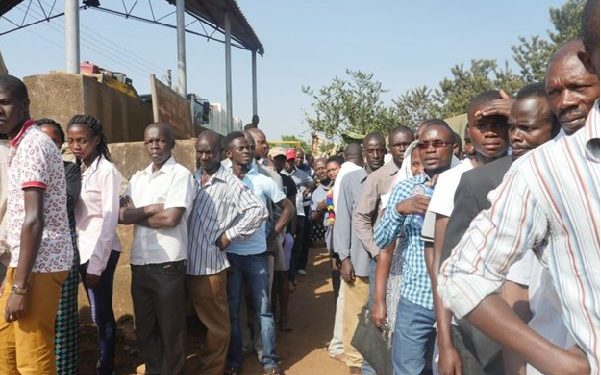


Africa’s story has long been one of promise, but the next chapters will define the world’s future. According to United Nations projections, Africa will house a quarter of the global population by 2050 — and nearly 40% by the end of the century. The continent will drive the majority of global population growth, making its economic and political trajectory critical to humanity’s shared destiny.
Against this backdrop, the world’s attention will turn to South Africa as it hosts the G20 Leaders Summit on November 22–23, 2025, marking the culmination of its historic G20 Presidency. South Africa remains the only African nation in the G20, and this moment may well be the continent’s only chance within our lifetimes to chair the world’s most influential economic forum.
The world’s shifting demographics will inevitably reshape global trade, industry, and supply chains. For Africa to claim its rightful place in the 21st century, three priorities must anchor G20 South Africa: industrial transformation, storytelling, and free trade.
Industrial Transformation and Technological Leapfrogging
Africa’s industrialization is not just desirable, it’s essential for global balance. The continent holds vast mineral and natural resources, including 30% of global reserves, yet remains under-industrialized. By adopting exponential technologies, from AI and advanced materials to next-generation supply chains, Africa can accelerate its integration into global production networks.
Recent developments such as Cassava Technologies’ $720 million AI Factory investment, Dangote Group’s pan-African industrial expansion, and Rwanda’s 2030 electricity access goal signal what’s possible when innovation, capital, and policy align.
Creative Economies and Storytelling Power
Africa must also rewrite its narrative. The continent’s creative industries, from film and fashion to media and digital content hold the power to reshape global perceptions and attract investment. As Sequoia Capital’s Don Valentine once said, “Money flows as a function of stories.” Similarly, Steve Jobs noted, “The most powerful person in the world is the storyteller.”
With initiatives like the $2 billion Creative Africa Nexus (CANEX) by Afreximbank, Africa’s creatives are poised to redefine how the world sees — and invests in — Africa’s innovation.
Driving Free Trade through the AfCFTA
Economically, Africa lags behind its demographic weight. With a population comparable to China and India, the continent’s GDP stands at just $2.8 trillion, far below its peers. The African Continental Free Trade Area (AfCFTA) offers a pathway to unlock this potential by removing barriers to intra-African trade and promoting value-added production.
Success will require stronger governance, stability, and infrastructure investment, as well as a commitment to empowering Africa’s youth — the first AI-native generation, who will shape how artificial intelligence impacts global equality.
Examples from China, Singapore, and South Korea prove that rapid transformation is achievable through sustained political will. Africa’s moment has come — and its success will shape the future of humanity itself.
In anticipation of this momentous year, Time Africa, Arena Holdings, and the New York Africa Chamber of Commerce (NYACC) will host official G20 South Africa Side Events on November 19–20, 2025, in Johannesburg. These gatherings will convene leaders, investors, creatives, and technologists to chart Africa’s role in the world’s economic and social evolution.
Together, we can turn Africa’s promise into progress, and ensure that the continent is not an afterthought, but the architect of a new global order.