
If there was ever any lingering doubt that Uganda’s now-infamous iron sheets could build more than just roofs, the Anti-Corruption Court has finally confirmed it—they can also construct a full-fledged political collapse, complete with prison walls, a decade-long career blackout, and a cautionary tale that will echo far beyond Karamoja.
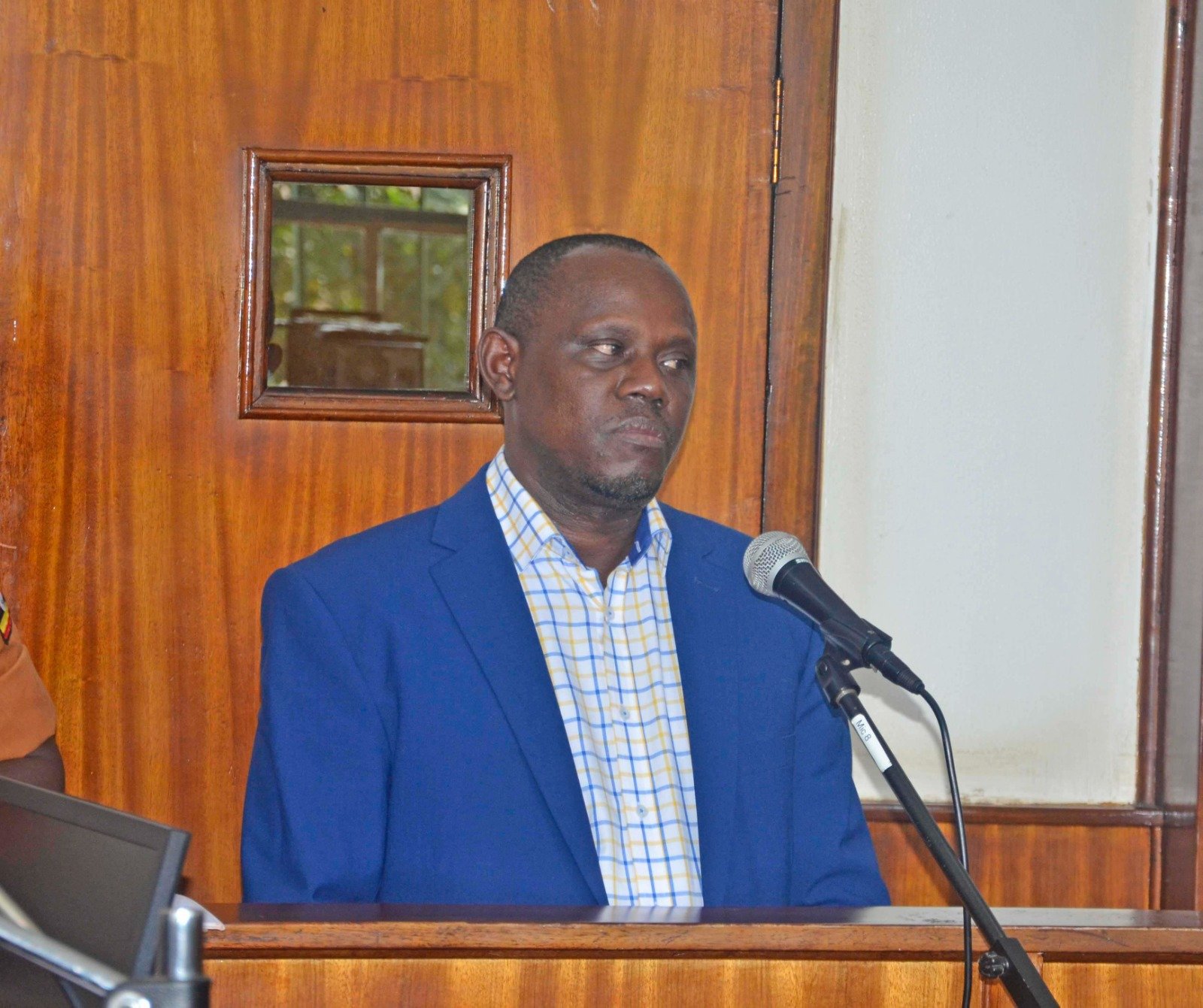
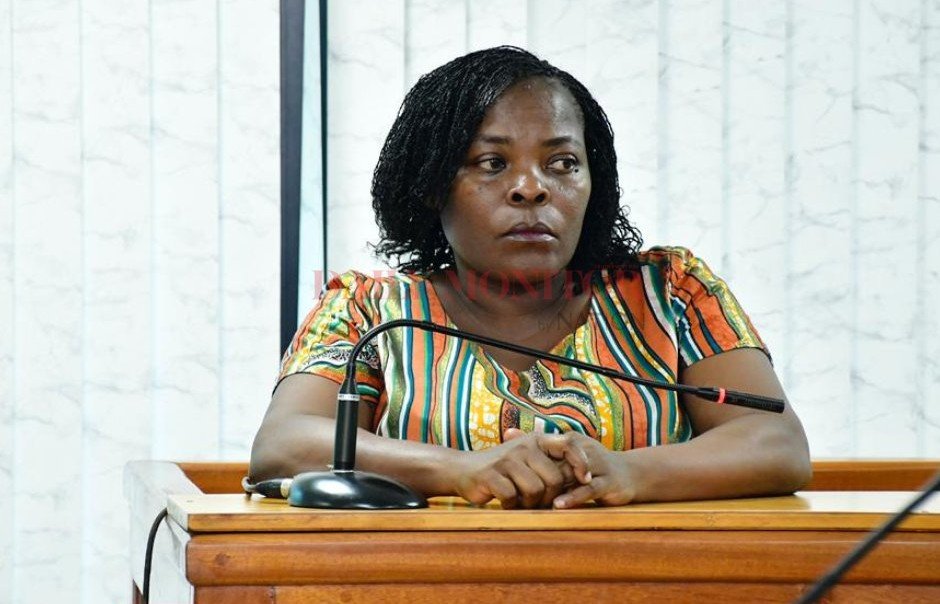
On Friday, April 10, 2026, former State Minister for Karamoja Affairs, Agnes Nandutu, returned to court—this time not to argue about the mysterious migration of 2,000 iron sheets, but to receive her sentence.
And in a ruling that landed with the weight of the very sheets at the center of the scandal, the court handed her four years in prison, effectively sealing her transformation from cabinet insider to convicted offender.
Yes, four years. Not four days of reflection, not four weeks of public apologies—four full years behind bars.
As if that wasn’t enough, the court added an extra layer of political insulation: Nandutu is now barred from holding public office for the next 10 years. A decade. In Ugandan politics, that is not just a timeout—it is practically an entire generation of relevance gone.
By the time she is eligible again, the political landscape may have shifted so dramatically that even the iron sheets themselves might have better chances of re-entering public service.
And yet, in true legal fashion, there is still a thin thread of hope dangling in the form of a 14-day window to appeal. Fourteen days to challenge a judgment that has taken three years to arrive. Fourteen days to attempt to undo what has now become one of the most high-profile convictions in Uganda’s recent anti-corruption efforts.
But let’s not get ahead of ourselves.
To fully appreciate the weight of this sentencing, one must revisit the absurdity—the almost theatrical irony—of the crime itself.
Because this was never about complex financial instruments or invisible offshore accounts. This was about iron sheets. Physical, countable, stackable iron sheets. The kind you can see, touch, and, apparently, redirect to your farm if you are sufficiently confident that no one will ask too many questions.
Originally intended for vulnerable communities in Karamoja—a region synonymous with hardship, chronic poverty, and the long, painful process of disarmament—these sheets were meant to provide shelter, dignity, and a semblance of stability.
Instead, at least 2,000 of them ended up in Mukono, quietly serving a purpose that had absolutely nothing to do with the people they were procured for.
And for a while, it seemed like that might be the end of the story. Another scandal, another round of outrage, another slow fade into the background noise of Ugandan politics.
But then came the court.
The conviction on April 8, 2026, was the first real indication that this story might not follow the usual script. And now, with sentencing delivered, that deviation has been cemented.
The four-year prison term is significant—not just for its length, but for what it represents. It is a rare instance where the diversion of public resources has translated into tangible consequences for a high-ranking official.
Rare, but not entirely satisfying—depending on who you ask.
Because even as Nandutu begins her prison term, the ghosts of the broader Karamoja iron sheets scandal remain very much alive.
Thousands of iron sheets were diverted. Multiple senior officials were implicated. Names were mentioned, files were opened, and then—almost magically—many of those files disappeared into the bureaucratic equivalent of a black hole.
Some suspects had their charges withdrawn. Others were never prosecuted at all, courtesy of what was described as “insufficient evidence.”
And so, as Nandutu heads to prison, she does so carrying not just her own conviction, but the weight of a scandal that was far bigger than any single individual.
It raises an uncomfortable question: is this justice, or is this a carefully measured dose of it?
Because while the court has undoubtedly made a strong statement, the selective nature of accountability continues to cast a long shadow.
Still, within the confines of the courtroom, the message was clear.
The diversion of public resources—no matter how “casually” executed—has consequences.
The judge’s earlier observations about the case still linger, particularly the disbelief at how easily 2,000 iron sheets were received without formal requisition or clear beneficiaries.
“It is shocking how casually the 2,000 iron sheets were received,” she had noted during the conviction.
Now, that casualness has been met with something far less relaxed: prison time.
For Nandutu, the implications are immediate and severe.
A four-year sentence means time in Luzira Prison, a far cry from the privileges of ministerial office. It means the abrupt halt of a political career that once included serving as Bududa Woman MP and holding a cabinet position. It means enduring the very public reality of a fall from grace that few politicians ever fully recover from.
And then there is the 10-year ban.
In a political environment where visibility, continuity, and timing are everything, being locked out for a decade is not just punitive—it is transformative. It effectively forces a reset, whether voluntary or not.
By the time those 10 years are up, the alliances will have shifted, the power structures rearranged, and the electorate—if memory serves—will have moved on to newer scandals, newer faces, and newer promises.
Of course, the right to appeal remains.
Fourteen days.
It is a small window, but in legal terms, it is a lifeline. Whether it will be used—and whether it will succeed—is another matter entirely.
Appeals can stretch for years, introducing new twists to an already convoluted story. They can overturn decisions, reduce sentences, or, in some cases, simply delay the inevitable.
For now, however, the reality is unchanged: Agnes Nandutu is a convicted former minister serving a four-year sentence for diverting iron sheets meant for some of the poorest communities in Uganda.
And that reality carries weight—not just for her, but for the broader conversation about corruption in the country.
Uganda has long struggled with the perception—and the reality—of widespread corruption. International rankings consistently place it among countries where the vice remains deeply entrenched. Public frustration has grown, fueled by repeated scandals that often end without meaningful consequences.
This case, therefore, stands out.
Not because it is the biggest scandal. Not because it involves the largest sums of money. But because it has produced a clear, visible outcome.
A conviction.
A sentence.
A ban.
It is, in many ways, a test case for whether the system can hold its own—whether it can move beyond rhetoric and deliver actual accountability.
But even as the system claims this small victory, the larger battle remains unresolved.
Because for every Nandutu, there are questions about others.
For every conviction, there are files that never made it to court.
For every sentence, there are beneficiaries who were never held to account.
And for every iron sheet that found its way to Mukono, there are countless others whose journeys remain unexplained.
In Karamoja itself, the original beneficiaries of the programme are still the silent backdrop to this entire saga.
Communities that were supposed to receive support during disarmament.
Families that were meant to benefit from government intervention.
People who, unlike the political elite, do not have the luxury of misplacing 2,000 iron sheets and calling it a misunderstanding.
For them, the sentencing may bring a sense of vindication—or perhaps just a quiet acknowledgment that something, at least, has been done.
Whether it is enough is another question.
Back in Kampala, however, the message is impossible to ignore.
The era of consequences—however selective, however delayed—may be inching closer.
And if iron sheets can bring down a minister, then perhaps, just perhaps, other forms of “casual” corruption might one day face a similar fate.
Or perhaps that is too optimistic.
After all, in a system where accountability often arrives late and unevenly, even a four-year sentence can feel like both a breakthrough and a reminder of how much remains unchanged.
For now, Agnes Nandutu begins her sentence.
The iron sheets have finally stopped moving.
And Uganda watches—half hopeful, half skeptical—as the story adds yet another chapter to the long, complicated saga of corruption, accountability, and the enduring question of who, ultimately, gets to walk away.