
President Yoweri Kaguta Museveni—often referred to by his supporters as Ssabalwanyi—used a high-level military lecture at the National Leadership Institute Kyankwanzi to push Uganda’s long-standing position on the Nile Basin debate, telling officers from Egypt that the river’s real crisis lies not in colonial-era agreements, but in Africa’s underdevelopment.
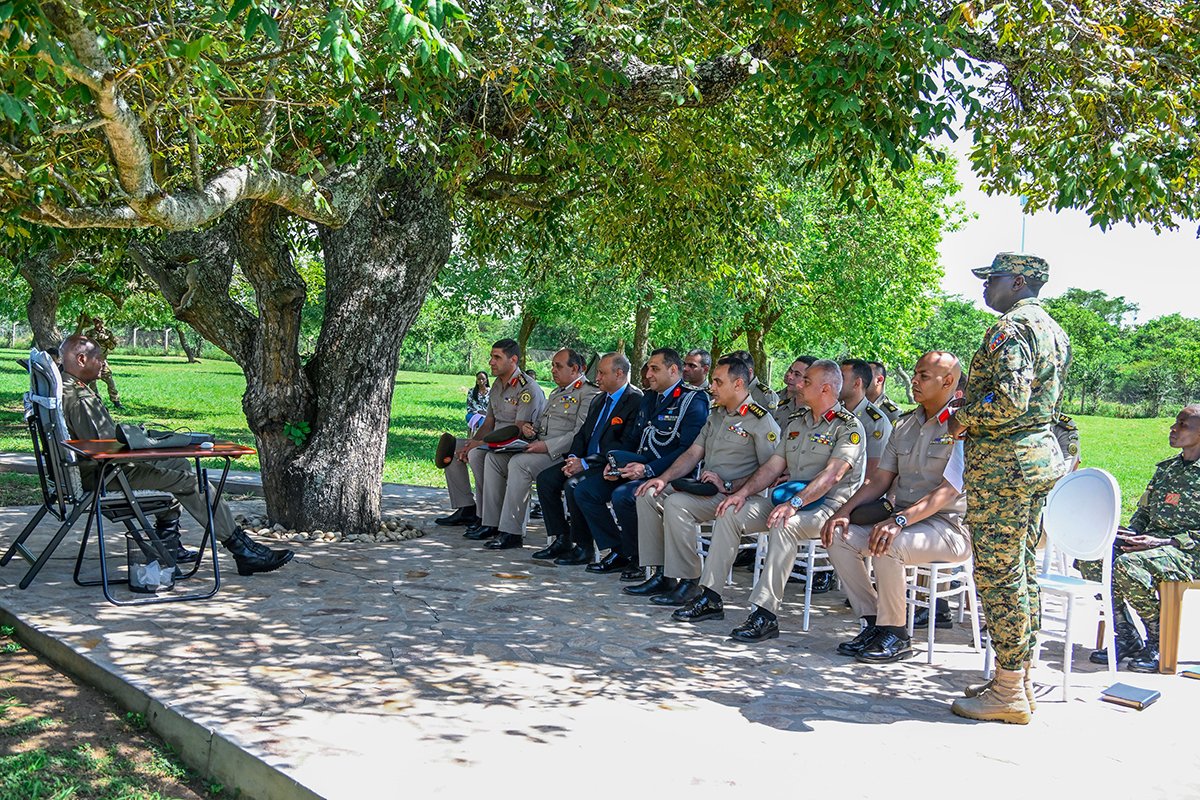
The President delivered the lecture on Thursday morning to a delegation from the Egyptian Armed Forces Staff and Command College, in what observers describe as both a diplomatic engagement and a subtle ideological masterclass directed at one of the Nile’s most influential downstream nations.
Shifting the Nile Debate
In his address, Mr Museveni challenged the traditional framing of the Nile dispute, which has historically revolved around colonial treaties that allocated the lion’s share of the river’s waters to downstream countries, particularly Egypt.
Instead, the Ugandan leader argued that the real threat to the Nile is structural and developmental.
“The real challenge of the Nile is not the old colonial agreements,” Museveni told the delegation, according to a statement shared on his official X (formerly Twitter) account. “It is underdevelopment in the tropics.”
He outlined a triad of problems afflicting upstream countries: limited access to electricity, low levels of industrialisation, and the growing impact of climate change. According to Museveni, these factors are driving environmental degradation and unsustainable use of water resources.
Electrification as the “Real Solution”
Museveni used the platform to advance a solution he has repeatedly championed in regional and continental forums—mass electrification and industrialisation.
He argued that without sufficient electricity, rural populations are forced to depend on biomass fuels such as firewood, accelerating deforestation and, ultimately, affecting rainfall patterns and water systems, including the Nile.
“If you don’t have electricity, you destroy the environment,” he said in essence, framing energy access as both an economic and ecological necessity.
The President further explained that industrialisation would enable African countries to move away from subsistence economies and adopt modern, efficient systems of production, thereby reducing pressure on natural ecosystems.
His remarks appeared aimed at reframing the Nile conversation from one of entitlement and historical grievance to one of shared responsibility and development-driven sustainability.
A Subtle Diplomatic Message to Egypt
While the tone of the lecture was described as cordial, Museveni’s message carried clear undertones for Egypt, a country that has long defended colonial-era agreements governing Nile waters.
By dismissing those agreements as secondary to development challenges, Museveni signaled Uganda’s continued support for a more equitable and modern framework for Nile resource management—an issue that has at times strained relations among Nile Basin countries.
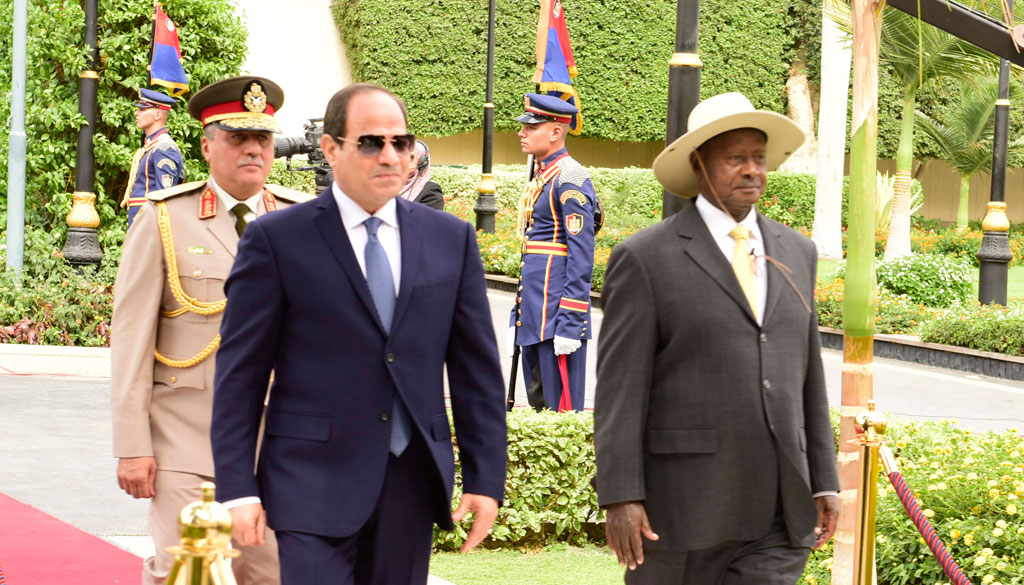
The presence of Egyptian military officers in the audience gave the remarks added weight, as the Nile remains a strategic and security concern for Cairo.
Ideological Grounding: Pan-Africanism and Nationalism
Beyond the Nile question, Museveni used the lecture to revisit the ideological foundations of his leadership and Uganda’s political trajectory.
He told the visiting officers that Uganda’s historical mission has been shaped by three key pillars: rejecting identity-based politics, promoting nationalism, and advancing Pan-Africanism.
These principles, he said, have guided Uganda’s efforts toward socio-economic transformation and regional integration.
Museveni has often positioned Uganda as a proponent of African unity, arguing that fragmented markets and politics have hindered the continent’s development potential.
Egyptian Delegation Tours Jinja
As part of their visit, the Egyptian military delegation toured the Source of the Nile in eastern Uganda—one of the most symbolic and geopolitically sensitive landmarks on the continent.
Museveni noted that the officers appreciated both the historical significance of the site and Uganda’s natural beauty, describing their visit as an opportunity to deepen mutual understanding.
The Source of the Nile has long been a focal point in discussions about the river’s management, making the delegation’s visit there particularly significant in the context of ongoing regional negotiations.
Strengthening Military and Diplomatic Ties
The lecture at Kyankwanzi also highlighted Uganda’s growing role in military diplomacy and training within Africa. The National Leadership Institute has increasingly hosted delegations from across the continent, serving as a platform for ideological orientation and strategic dialogue.
By engaging directly with Egyptian military officers, Museveni reinforced Uganda’s position as both a political and intellectual actor in regional affairs.
A Broader Vision for Africa
Ultimately, Museveni’s lecture went beyond technical discussions about the Nile. It was a broader pitch for a development-first approach to Africa’s challenges—one that prioritises infrastructure, energy, and industrial growth over historical disputes.
His message to the Egyptian delegation was clear: the future of the Nile, and indeed the continent, will be determined less by treaties signed decades ago and more by the ability of African nations to modernise their economies while protecting their environment.
As the delegation continues its stay in Uganda, the engagement signals an ongoing effort to bridge perspectives between upstream and downstream countries—through dialogue, diplomacy, and, as Museveni demonstrated, a firm dose of ideological persuasion.