
The unfolding drama at National Resistance Movement retreat in Kyankwanzi is quickly morphing from a routine “ideological alignment” session into something closer to a slow-burning political panic—especially for those who thought the Speaker’s chair was already safely reserved.
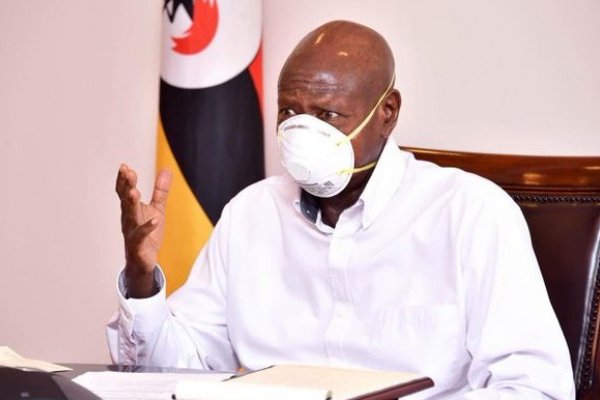
President Yoweri Museveni, in his usual calm-but-loaded tone, casually tossed a political grenade into the room when he suggested—quite unhelpfully for the incumbents—that the question of who becomes Speaker is, in fact, still open for “discussion.”
Translation: what was whispered as a done deal may not be so done after all.
This clarification was prompted by Aringa South MP Alioni Yorke Odria, who used his precious two minutes not for pleasantries, but to poke directly at the increasingly uncomfortable elephant in the room: had the party’s top organ, the NRM Central Executive Committee, already decided the fate of Parliament leadership behind closed doors?
For weeks, the script seemed straightforward. Incumbent Speaker Anita Among and her deputy Thomas Tayebwa had reportedly been endorsed for another five-year term—efficient, tidy, and very much in line with how things tend to work. The CEC decides, the caucus nods, and everyone goes home.
Except this time, someone asked a question.
And suddenly, the “certainty” began to wobble.
President Museveni confirmed that yes, the CEC had indeed made a recommendation—but then added, almost as an afterthought, that the matter would be revisited and other aspirants would be given a chance to present their case “at the right time.” It was the political equivalent of saying: relax, but also… don’t relax.
For Ms Among and Mr Tayebwa, who were reportedly already warming up for a seamless return, the statement has landed like an unexpected audit. What was supposed to be a formality is now a contest—again.
And the list of people ready to “present their case” is not exactly short.
Mr Odria himself is in the race, joined by Lydia Wanyoto and Florence Asiimwe Akiiki, all within the ruling party. Then comes the more adventurous lineup: Norbert Mao, who appears unfazed by party boundaries, and Persis Namuganza, who has also dismissed the earlier endorsement as irregular.
Mr Mao, never one to think small, has already floated plans to use the Speaker’s office to champion the creation of an Upper House based on sub-regions—because if you’re going to aim, you might as well aim constitutionally high.
His ambition, however, has been politely (and repeatedly) discouraged by Mr Tayebwa, who has reminded him that the ruling party is unlikely to “make the mistake” of electing someone from outside its ranks.
Mr Mao’s response? He’ll simply have a discussion with the same party. Confidence, it seems, is also in abundant supply at Kyankwanzi.
Meanwhile, critics within the NRM are not just questioning the outcome—they are questioning the process. Mr Odria bluntly argued that the CEC, powerful as it is, cannot replace the constitutional role of MPs.
“We are the pillars of the party,” he essentially said, in what sounded less like a submission and more like a warning. The message: if MPs are reduced to rubber stamps, the rubber might eventually refuse to stamp.
Ms Namuganza went further, calling the alleged endorsement illegal because it was not even on the agenda of the meeting that supposedly produced it—suggesting that the decision may have materialised with impressive efficiency, if not procedural clarity.
Ironically, the party’s own rules—particularly Section 9 of the NRM Parliamentary Caucus procedures—outline a fairly democratic process: interested candidates apply, the CEC reviews, and the caucus votes. Simple, on paper. Slightly more complicated in practice, especially when outcomes appear pre-packaged.
Now, with over 400 MPs gathered at Kyankwanzi for a retreat officially dedicated to “protecting gains” and pushing Uganda toward middle-income status, the more immediate concern seems to be protecting political positions.
The retreat, which runs until next week, was supposed to focus on ideology, strategy, and national development. Instead, it has become an arena where ambitions are declared, endorsements questioned, and carefully laid plans nervously reconsidered.
In short, what began as a quiet endorsement has turned into a very public maybe.
And somewhere between “we shall discuss” and “at the right time,” the race for Speaker has been thrown wide open—along with a fair amount of anxiety for those who thought they had already won it.