
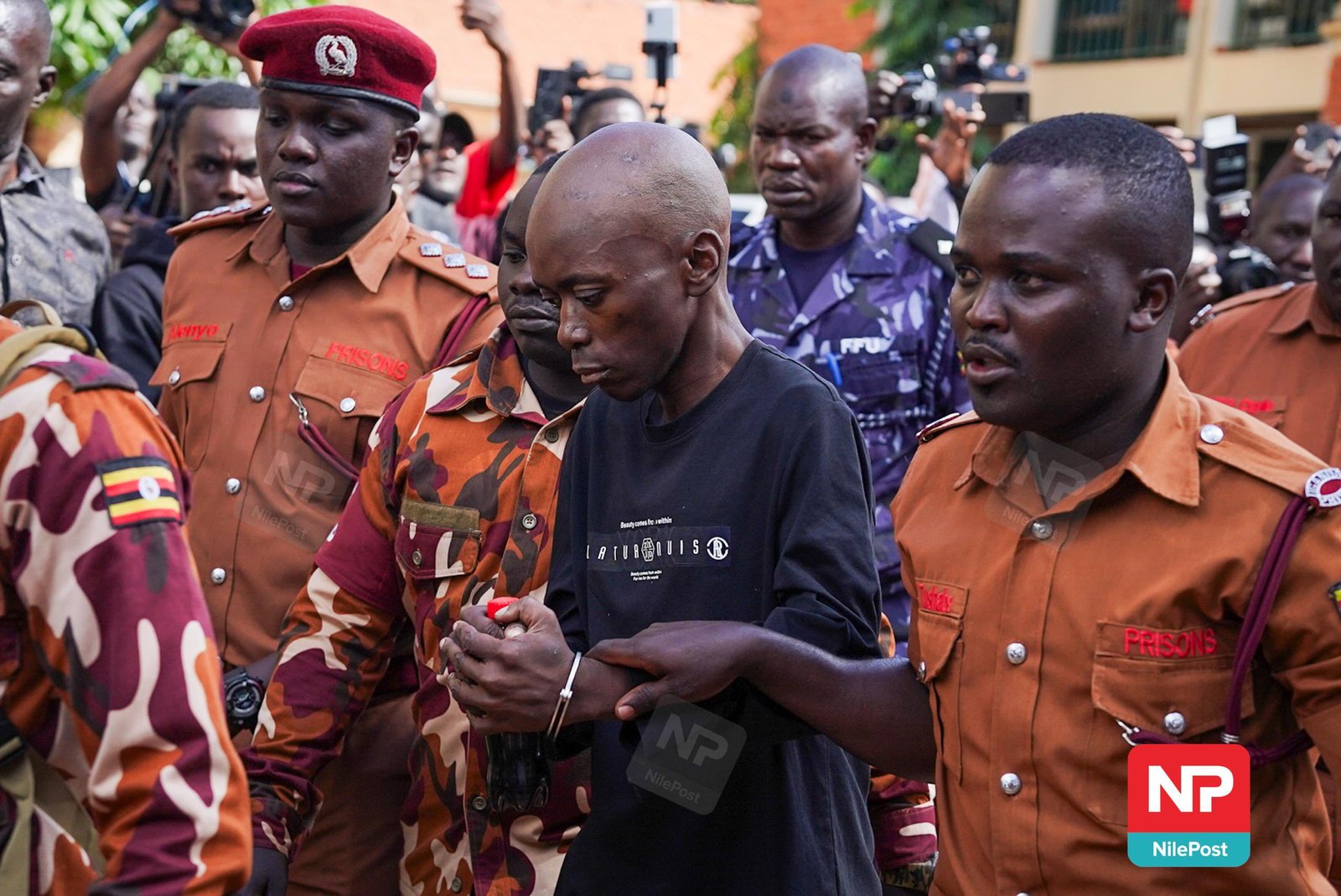
The case of the brutal killing of four toddlers in Ggaba is no longer being treated as a random act of violence, but as a chilling example of how the dangerous belief in wealth through ritual sacrifice continues to manifest in Uganda’s urban spaces.
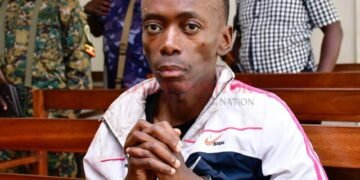
Christopher Okello Onyum, 38, the prime suspect, has been committed to the High Court for trial after prosecutors laid out a disturbing account that places the alleged murders within the context of deliberate “fortune hunting” through human sacrifice.
The committal, handled by Makindye Chief Magistrate Sarah Basemera, was unusually swift—underscoring both the gravity of the crime and the weight of evidence assembled by the state.
At the centre of the prosecution’s case is a claim that Okello was not acting under any mental impairment, but rather out of a calculated and deeply troubling belief that killing young children could bring him wealth and prosperity.
According to the Director of Public Prosecutions (DPP), Okello openly articulated this motive during interrogation, describing the killings as a pathway to enrichment.
This framing shifts the narrative from one of isolated brutality to something more unsettling: a premeditated act rooted in ritualistic thinking that has long haunted parts of the country, often whispered about in connection with sudden wealth, shadowy dealings, and unexplained disappearances.
Court heard that medical and psychiatric evaluations found Okello mentally sound. Despite his claims of a history of mental illness, assessments conducted after his arrest painted a very different picture.
He was described as calm, coherent, and fully aware of his actions, with intact memory and sound judgement. A prior psychiatric report dated December 2025 had also cleared him of any mental disorder, affirming that he was fit to live and work normally.
For prosecutors, this detail is critical. It suggests that the killings were not the result of a disturbed mind, but of a deliberate choice influenced by belief in ritual sacrifice as a means to gain wealth.
Investigators believe the attack was carefully planned days in advance. On March 31, Okello reportedly rented a Toyota Rav4, a move prosecutors interpret as part of his preparation.
The following day, he allegedly drove across Kampala—through Ntinda, Nakawa, Kibuli, Kabalagala, and Bunga—mapping out his route to the daycare centre in Ggaba.
At the facility, he posed as a parent seeking admission for a child, gathering information and studying the environment. This reconnaissance mission, the state argues, was a crucial step in selecting his target—young, vulnerable children in a setting where they would be least protected.
On the morning of the attack, Okello returned, this time taking the final steps to gain access. He reportedly sent Shs195,000 via mobile money to the daycare’s head, presenting himself as a legitimate client. Once inside, the façade quickly collapsed.
According to the prosecution, he exited the office and immediately launched a violent assault on the children playing in the compound. When a caretaker attempted to intervene, he allegedly threatened her life, reinforcing the prosecution’s claim that he was determined to complete what they describe as a “mission.”
The attack left four toddlers dead—children aged between one and three years—sending shockwaves across the country. What made the tragedy even more horrifying, prosecutors say, was the methodical nature of the violence.
The suspect was armed with multiple knives, suggesting preparation not just to attack, but to ensure the act was carried out without interruption.
Medical findings presented in court revealed the severity of the injuries. The children died from hypovolemic shock caused by deep neck wounds that severed critical structures, including major blood vessels and the spinal cord. The extent of the injuries pointed to extreme force and intent to kill.
Two of the victims suffered particularly deep wounds, while the others sustained similarly fatal injuries. Despite efforts to rush some of them to a nearby medical facility, they were pronounced dead on arrival.
Prosecutors also told court that Okello attempted to dispose of the murder weapon during his arrest, an act they argue further demonstrates consciousness of guilt. Two additional knives reportedly fell from his pockets as he was being escorted by police, reinforcing the view that he had come prepared for a sustained attack.
A search of his residence in Kyanja uncovered items that have added another layer of intrigue to the case. Among them were two American passports bearing his name, electronic devices, and documents including a certificate of good conduct and a psychiatric report.
Immigration records showed that he had been travelling frequently, with his most recent entry into Uganda recorded in February 2026 through the Busia border.
While these details do not directly prove involvement in ritual practices, prosecutors appear to be building a profile of a man who was organised, mobile, and capable of executing a plan without raising immediate suspicion.
The idea of killing for wealth—often linked to so-called ritual sacrifice—has long existed on the fringes of public discourse in Uganda. It is frequently associated with clandestine networks, traditional beliefs distorted for profit, and individuals seeking rapid financial gain.
Though often dismissed as myth or exaggeration, cases like this one bring the issue into sharp and uncomfortable focus.
What makes the Ggaba killings particularly disturbing is the setting. Unlike previous cases often reported in remote or rural areas, this attack occurred in a daycare centre within a busy urban suburb of Kampala.
It challenges assumptions that such acts are confined to isolated environments and suggests that the underlying beliefs can surface anywhere.
As the case moves to the High Court, it is expected to not only determine Okello’s guilt or innocence, but also reignite national debate about the persistence of ritualistic beliefs tied to wealth, and the extent to which they may be influencing criminal behaviour.
Okello remains on remand at Luzira Prison and retains the right to apply for bail. If convicted, he faces the maximum penalty under Ugandan law.
For now, the country continues to grapple with the horror of what happened in Ggaba—a tragedy that has forced many to confront a difficult question: how far can the pursuit of wealth drive a person, and what happens when that pursuit is shaped by beliefs that place human life at the lowest possible value?