

Uganda’s diplomatic missions in Europe and the Americas have been urged to sharpen their focus on delivering tangible economic results, as the government intensifies its push to align foreign policy with national development priorities.
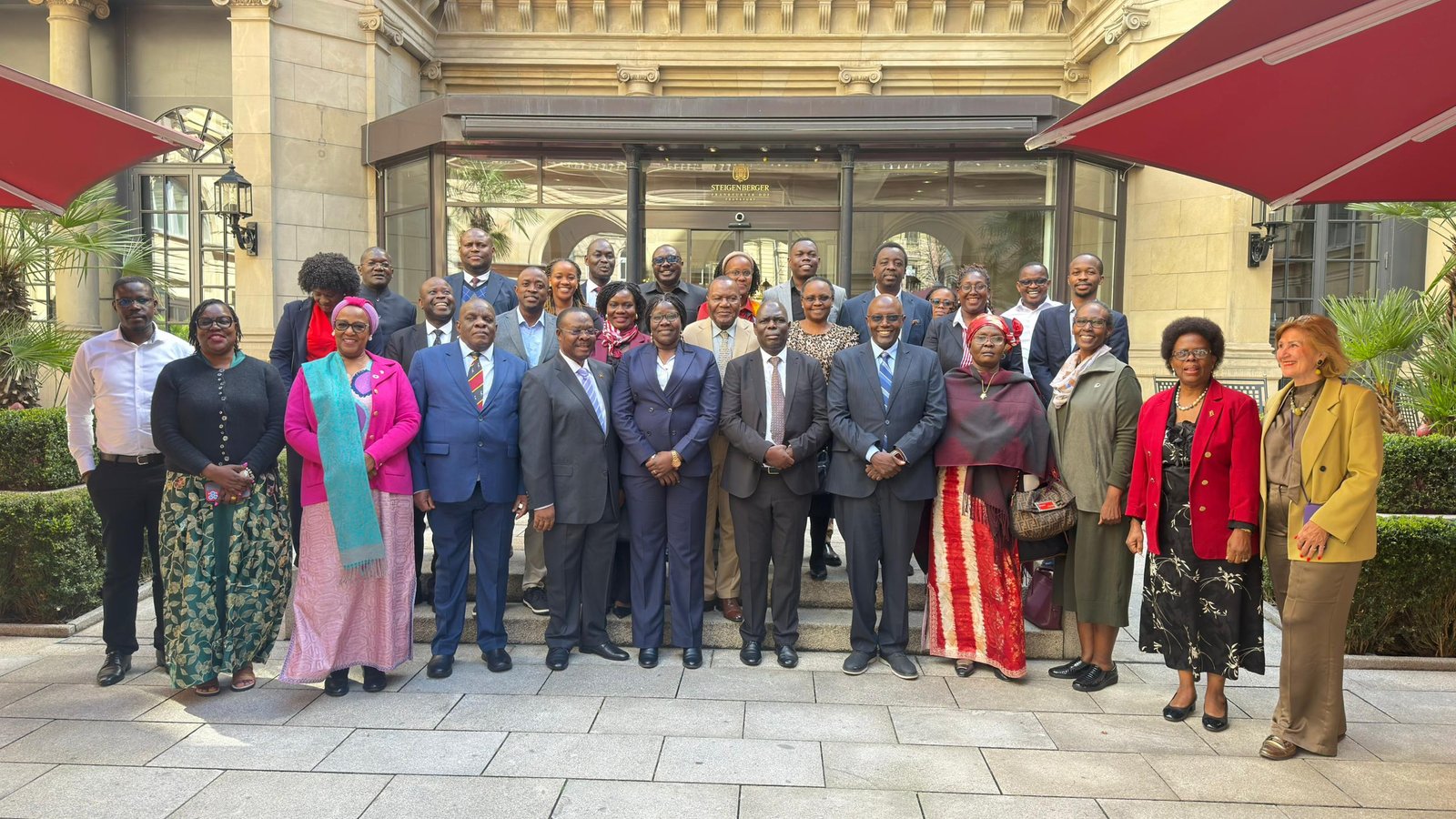
This was the central message at a mid-term review retreat held in Frankfurt from March 29 to April 3, bringing together Heads of Mission from 13 Ugandan embassies, alongside officials from the Ministry of Finance, Planning and Economic Development.
Speaking at the retreat, Permanent Secretary at the Ministry of Foreign Affairs, Vincent Waiswa Bagiire, emphasized that Uganda’s missions abroad will increasingly be evaluated based on their contribution to economic diplomacy rather than traditional protocol roles.
“Uganda is at a moment where diplomacy must be felt not only in communiqués and meetings, but in factories opened, tourists received, exports increased, and jobs created back home,” Bagiire said.
He noted that in the 2025/26 financial year, 34 Ugandan missions received a combined allocation of UGX 113.25 billion, adding that future funding will be tied to measurable outcomes.
The retreat reviewed progress under Uganda’s Economic and Commercial Diplomacy (ECD) Strategy for FY 2025/26–2029/30, launched in August 2025 in Gulu. The strategy repositions diplomatic missions as key drivers of exports, foreign direct investment (FDI), tourism, and partnerships in science, technology, innovation, and climate finance.
It also aligns Uganda’s foreign policy implementation with broader national frameworks, including Vision 2040, the Fourth National Development Plan (NDP IV), and the government’s Tenfold Growth Strategy.
Bagiire told envoys that their postings in major global markets and financial centres carry direct implications for livelihoods back home.
“You are posted in some of the world’s most influential markets… your work matters directly to the farmer in Kabale, the coffee exporter in Masaka, the tour operator in Kasese, the miner in Karamoja, and the young innovator in Kampala,” he said.
Discussions at the retreat were informed by recent economic indicators, which showed Uganda attracted approximately US$3.5 billion in FDI in 2025, while tourism generated US$1.5 billion from 1.64 million international visitors.
Heads of Mission also shared operational challenges and explored solutions to enhance performance.
Among the key outcomes of the meeting was the adoption of a comprehensive ECD reporting framework aimed at improving transparency and accountability. The retreat also produced a progress report outlining achievements and challenges, an impact assessment of ECD contributions to economic growth, and a capacity-building plan to strengthen diplomats’ technical expertise.
Additionally, harmonised work plans for the 2026/27 financial year were validated to ensure alignment with national priorities and budget allocations.
Head of the Economic and Commercial Diplomacy hub, Richard Kabonero, said the review was critical in ensuring that missions are operating within agreed strategic frameworks.
He added that future ECD funding will be guided by a data-driven assessment model, evaluating missions based on performance, capacity, economic potential, and diaspora engagement.
“This approach ensures that funding supports missions that drive maximum economic returns and advance the country’s interests,” Kabonero said.
The Frankfurt retreat marks a continued shift in Uganda’s diplomatic posture, with growing emphasis on accountability and results in advancing the country’s economic transformation agenda.