

Officials from the Ministry of Finance, Planning and Economic Development have hosted a high-level delegation from the Ministry of Finance on a peer learning mission focused on strengthening Public Investment Management (PIM) systems.
The delegation from Botswana, comprising Deputy Director Development Budget Mr. Edwin Tebangwa, Chief Economist Mr. Moemodi Max Sebudubudu, and Principal Economist Ms. Dimpho Baleseng, is in Uganda to study the country’s framework for identification, appraisal, and selection of public projects, as well as fiscal management within approved expenditure ceilings.
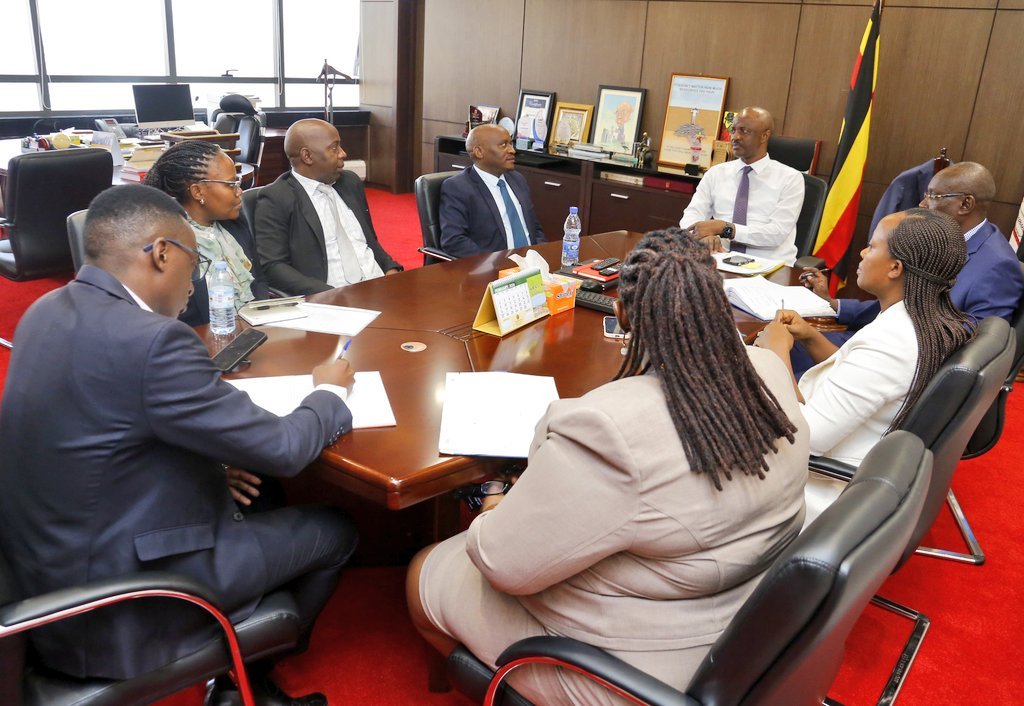
The visiting team on Wednesday met the Permanent Secretary and Secretary to the Treasury (PSST), Dr. Ramathan Ggoobi, alongside Acting Director Budget Hannington Ashaba and a technical team from the Projects Analysis and Public Investment Department.
According to officials, Botswana is particularly interested in understanding how Uganda manages its project pipeline amid tightening budget constraints and competing national priorities.
The delegation is also seeking insights into how Uganda rationalizes what is often described as a bloated project portfolio, ensuring that only viable and strategic projects are implemented.
During the meeting, Dr. Ggoobi welcomed the delegation and outlined the key pillars underpinning Uganda’s public investment framework. He stressed that strong political and technical leadership is essential for the successful execution of public projects.
“Top leadership must fully support the process, and projects must undergo rigorous evaluation to succeed,” Dr. Ggoobi noted, emphasizing the importance of evidence-based decision-making in project approval and funding.
Uganda’s Public Investment Management system requires projects to undergo thorough appraisal before they are admitted into the national budget. This includes feasibility studies, cost-benefit analysis, and alignment with national development priorities.
Officials say the system is designed to ensure value for money, curb wasteful spending, and enhance service delivery.
Dr. Ggoobi further highlighted the importance of capacity building within government institutions. He underscored the need to continuously train technical officers on PIM processes, particularly in project appraisal methodologies.
“The Ministry’s technical team must acquire in-depth knowledge on how project appraisals are done and also train other government ministries and departments,” he said.
The PSST also pointed to institutional mechanisms that Uganda has established to strengthen project governance, including the Integrated Bank of Projects and the Development Committee, which scrutinizes and approves major public investments before they are included in the budget framework.
Additionally, Dr. Ggoobi encouraged exploring co-investment arrangements with the private sector as a strategy to bridge financing gaps and enhance efficiency in project implementation.
Officials from Botswana expressed interest in Uganda’s approach to managing a centralized project database, which enables better tracking, monitoring, and evaluation of government-funded initiatives. Effective database management, they noted, is critical in ensuring transparency and preventing duplication of projects.
The peer learning mission reflects growing collaboration among African countries in sharing best practices on public financial management and sustainable development financing.
As governments across the continent grapple with limited fiscal space and rising development needs, strengthening Public Investment Management systems has become a key priority.
The Botswana delegation is expected to hold additional technical engagements with various departments within the Ministry before concluding their visit.