


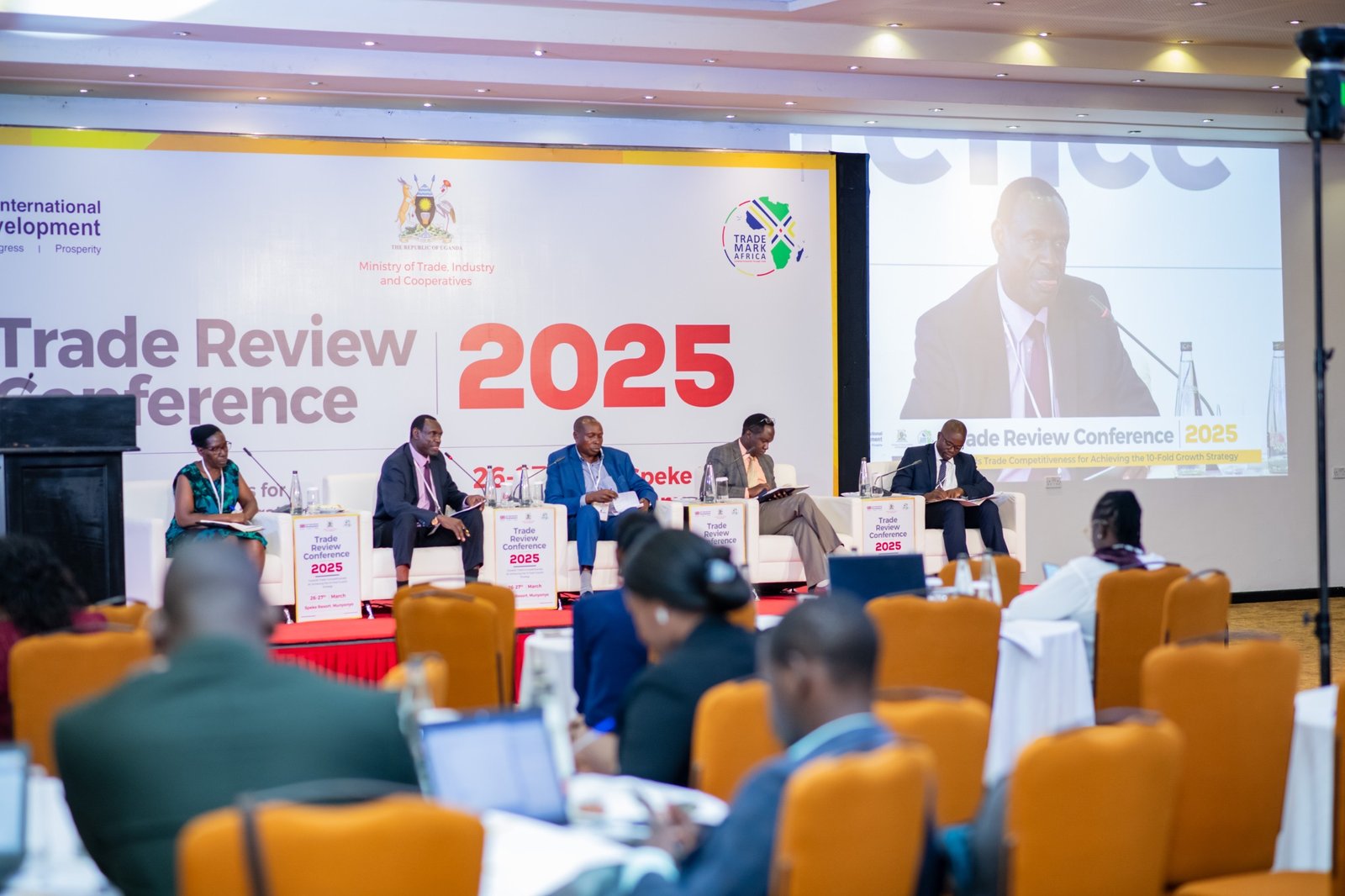
Ministry of Trade, Industry and Cooperatives (MTIC), in partnership with TradeMark Africa, UK International Development and other partners, has announced the National Trade Sector Review Conference 2026, set to take place on March 4–5 in Kampala.
The high-level conference will be held at the Commonwealth Resort Munyonyo under the theme “Trade-Driven Transformation: Propelling Uganda to a $500B Economy by 2040.”
It is designed as a national platform to assess the performance of Uganda’s Trade, Industry and Cooperatives sector, evaluate progress on past reforms, and generate actionable strategies to accelerate growth.
Aligning Trade With Uganda’s Tenfold Growth Ambition
The conference comes at a critical moment as Uganda seeks to expand its economy nearly tenfold—from approximately $50 billion to $500 billion by 2040. Organisers say the gathering will provide a structured environment to align the country’s trade strategy with this ambitious target.
The dialogue will be anchored on Uganda’s ATMS growth model—Agro-industrialisation, Tourism Development, Mineral Development, and Science, Technology and Innovation—key pillars of the country’s Tenfold Growth Strategy.
Between 250 and 350 participants are expected to attend, including representatives from government ministries and agencies, private sector leaders, micro, small and medium enterprises (MSMEs), cooperatives, civil society, academia, development partners, regional trade bodies, and the media.
Officials say the conference will produce a time-bound national communiqué and implementation matrix to ensure that resolutions translate into measurable reforms.
Revised National Trade Policy to Be Unveiled
A major highlight of the conference will be the launch of Uganda’s revised National Trade Policy (NTP), nearly two decades after the current policy was adopted.
The updated policy has been aligned to emerging economic realities, including opportunities under the African Continental Free Trade Area (AfCFTA), expansion into new regional markets, and a stronger focus on value addition.
According to organisers, the revised policy aims to enhance Uganda’s competitiveness and support the country’s long-term economic transformation agenda.
Anna Nambooze, Country Director of TradeMark Africa, said the organisation’s support reflects its commitment to enabling trade through practical reforms that reduce the cost of doing business, improve border efficiency, strengthen standards and sanitary and phytosanitary compliance, and promote value-chain competitiveness—while ensuring inclusion of women and youth.

She noted that the conference will also help strengthen coordination across trade institutions and stakeholders, accelerating reform implementation and reinforcing trade as a key driver of Uganda’s growth ambitions.
New Strategies and Digital Reporting Platform
In addition to the revised trade policy, the Ministry will launch several strategic instruments during the conference, including:
- The National Trade Policy Development and Implementation Plan
- The National Export Development Strategy (NEDS)
- An Online Reporting Platform
These tools are expected to guide regulatory reforms, boost export promotion, strengthen services trade competitiveness, support minerals-based industrialisation, scale agro-industrial value chains, and expand cooperative-led trade.
Officials say the digital reporting platform will improve transparency, monitoring, and accountability in trade policy implementation.
Call for Registration and Exhibition
The Ministry has called upon businesses across manufacturing, agro-processing, ICT and digital trade, logistics, financial services, minerals, high-value manufacturing, cooperatives, and services sectors to register and participate in shaping Uganda’s trade transformation agenda.
Organisers have also opened exhibitor registration, offering businesses an opportunity to showcase innovations, build partnerships, and engage policymakers. Exhibition space will be allocated on a first-come, first-served basis.
The National Trade Sector Review Conference 2026 is expected to strengthen stakeholder coordination, increase media awareness of Uganda’s trade policy direction, and accelerate reforms aimed at driving export growth, value addition, structural transformation, and inclusive economic development.
As Uganda positions trade at the centre of its economic strategy, the March conference is set to define the policy direction and reform commitments that could shape the country’s path toward a $500 billion economy by 2040.