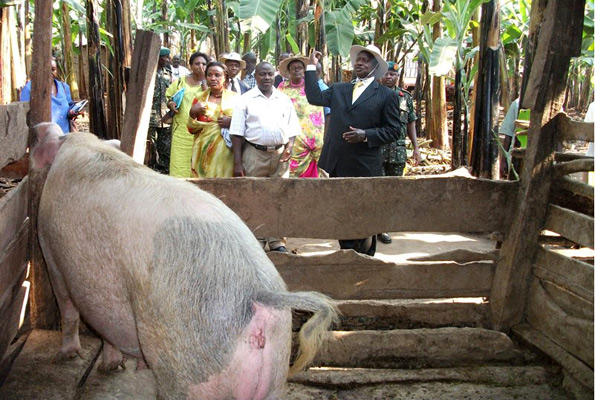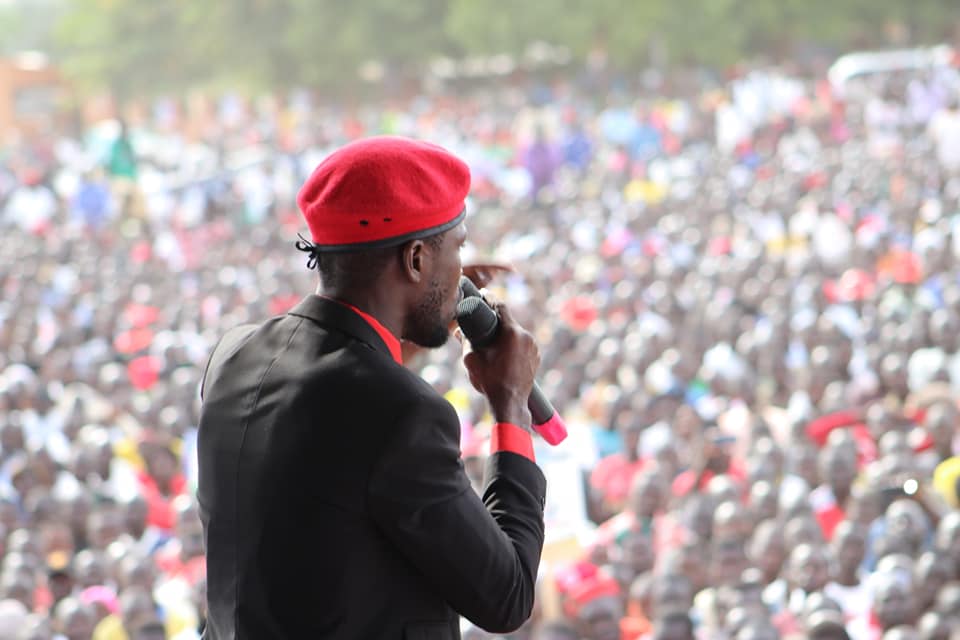


President Yoweri Kaguta Museveni has emerged as the frontrunner in an online opinion poll conducted by NBS journalist Canary Mugume, which tested support for four of the eight presidential candidates recently nominated for Uganda’s 2026 elections.
The poll, run on Mugume’s verified X (formerly Twitter) account under the hashtag #UgVotes2026, attracted 70,684 votes in less than 24 hours. According to the final results, Museveni secured 51%, followed by National Unity Platform (NUP) leader Robert Kyagulanyi Ssentamu, alias Bobi Wine, with 37%.
Alliance for National Transformation (ANT) candidate Gen. Mugisha Muntu polled 11%, while Forum for Democratic Change (FDC) flagbearer Nathan Nandala Mafabi trailed at 1%.
The poll has already generated heavy debate online, drawing more than 387,000 views, 3,200 likes, and nearly 1,000 shares. Supporters of different camps used the platform to either celebrate or question the credibility of online surveys in reflecting ground-level support.
While online polls are non-scientific and not representative of the entire electorate, the outcome highlights the early momentum and perceptions shaping Uganda’s highly anticipated 2026 presidential race.
By contrast, a more traditional opinion poll published recently by Uganda’s Vision Group (New Vision) placed President Yoweri Museveni ahead in an earlier snapshot of voter preferences. That survey, which the paper billed as a citizens’ manifesto and opinion poll, was carried in a paid special report and has been cited in editorial analysis as an indicator that Museveni retains a solid base of support. The Vision Group poll’s methodology and sampling are not fully public in its paywalled report, but it has been treated by some media as an early conventional measure of the race.
Museveni, who has been in power since 1986, faces one of his toughest challenges yet, with opposition figures promising to capitalize on public discontent over unemployment, governance, and service delivery.
What the early polls mean, and what they do not
- Different audiences, different results. The Canary Mugume poll was conducted on X and reflects a self-selecting, digitally active audience, a cohort skewed young, urban, and highly engaged with social media. Such polls are useful as indicators of enthusiasm and online traction, but they are not statistical samples of the national electorate.
- Traditional polls carry caveats, too. Legacy media and commissioned surveys (such as the Vision Group’s) may sample broader demographics but can be constrained by access, timing, and editorial framing. Where methodology is opaque, interpretation should be cautious.
- Context matters. Uganda’s political environment, marked by a history of tense campaigns, allegations of repression, and vigorous state-opposition rivalry, affects how freely voters express views in surveys and online. Observers note that harassment, media pressures, and the presence of state actors can all shape polling responses and turnout projections.
Why both polls still matter
Social polls like Mugume’s are early heat maps because they show which candidate narratives are driving the most online engagement and can help campaigns mobilize volunteers, donations, and social buzz. Conventional polls aim to estimate broader vote intention and can influence donor decisions, party strategy, and media coverage. Taken together, they map the contrast between enthusiasm (often favorable to challengers with strong youth followings) and entrenchment (often favorable to incumbents with established networks).
With the official campaign period yet to commence, the Canary Mugume poll provides an early snapshot of how Ugandans on social media are leaning, but the real test will come when ballots are cast in 2026.
By press time, renowned cartoonist, and columnist Jim Spire Ssentongo had also put up a poll (on his X account) which had so far garnered 17,183 votes with President Museveni closely behind NUPs Robert Kyagulanyi.