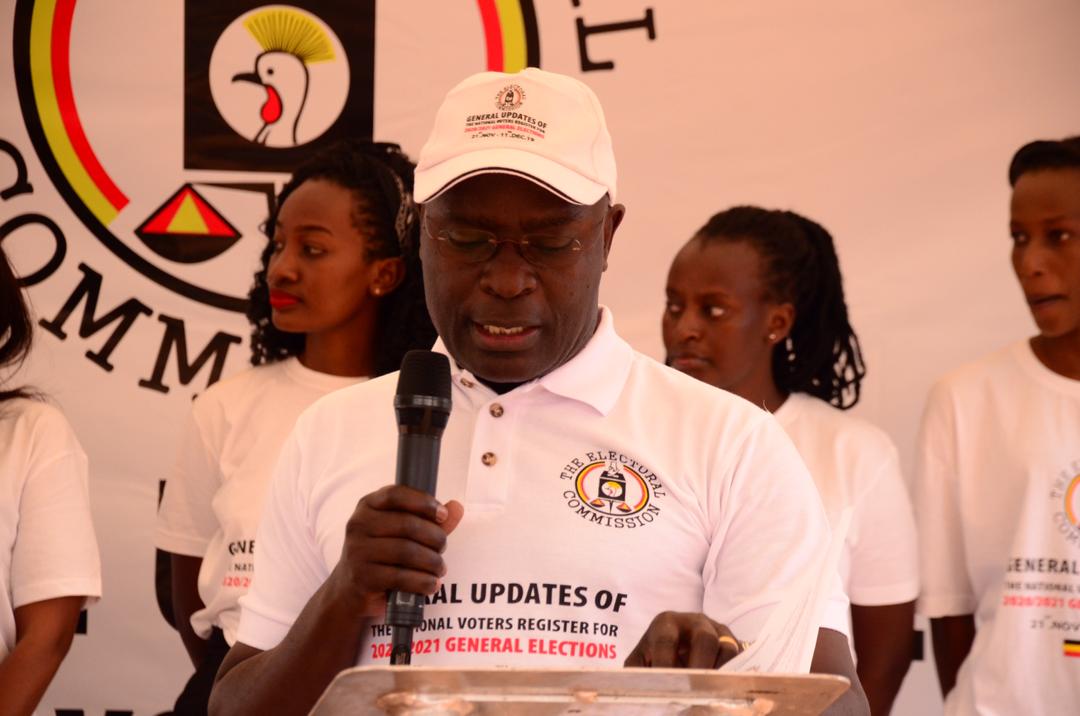



The Electoral Commission has revised the nomination dates for presidential candidates in the 2025/2026 General Elections, moving the process a week earlier than initially scheduled.
Speaking at a press briefing in Kampala, Electoral Commission Chairperson, Justice Simon Byabakama Mugenyi, announced that the nominations, which were originally planned for October 2nd and 3rd, 2025, will now take place on September 23rd and 24th, 2025.
Justice Byabakama explained that the adjustment was necessary to allow sufficient time for post-nomination processes critical to a smooth campaign period. These include the capture and processing of nomination returns, production of ballot paper samples, harmonisation of campaign schedules among candidates, and signing of a Memorandum of Undertaking by all those nominated.
“Maintaining the original nomination dates would have severely constrained the time available for candidates to conduct their campaigns,” the Chairperson said.
Key Electoral Dates Confirmed
The Commission also took the opportunity to remind stakeholders of other key dates under the General Elections Roadmap:
- Nomination of Local Government Candidates (including SIGs): 3rd – 12th September 2025
- Nomination of Parliamentary Candidates: 16th – 17th September 2025
- Nomination of Presidential Candidates: 23rd – 24th September 2025
- Nomination of SIG Representatives to Local Governments: 8th – 12th December 2025
- Presidential Campaign Period: 4th October 2025 – 12th January 2026
- Parliamentary Campaign Period: 23rd September 2025 – 12th January 2026
- Local Government Campaigns (including SIGs): 13th September 2025 – 12th January 2026
- Polling Period for all categories: 12th January – 9th February 2026
Justice Byabakama called upon political parties, organisations, and independent aspirants to align their preparations with the adjusted timelines.
Presidential Aspirants Urged to Prepare for Signature Collection
The Commission also highlighted procedures that aspirants must follow in preparation for nomination. Notably, presidential candidates are required, under Section 10(b) of the Presidential Elections Act, to gather signatures of at least 100 registered voters in two-thirds of all districts in Uganda—approximately 97 districts.
The Commission said it will soon announce the start date for collecting the supporter forms and timelines for signature collection and submission for verification.
Similar guidance will also be issued for the collection of nomination forms for parliamentary and local government elections.
Academic Qualifications Verification Clarified
Addressing concerns over academic qualifications, the Commission clarified who is required to submit academic documents for verification and under what conditions.
Candidates for President, Member of Parliament, and District/City Chairperson/Lord Mayor must have a minimum of Advanced Level (A-Level) or its equivalent. Those who obtained qualifications outside Uganda must have them verified by the National Council for Higher Education (NCHE), in consultation with the Uganda National Examinations Board (UNEB).
Furthermore, the Commission stressed that certificates of equivalency used in previous elections will not be accepted in the 2025/2026 electoral cycle unless the aspirant has since attained a higher qualification obtained in Uganda.
However, the following categories of aspirants are exempt from both NCHE and EC academic verification:
- Those with A-Level certificates obtained in Uganda.
- Those with higher qualifications (such as diplomas or degrees) earned within Uganda.
- Those with higher qualifications from the former University of East Africa or any of its constituent colleges.
These individuals are not required to establish their academic qualifications with the Electoral Commission ahead of the nomination period.
Special Interest Group Elections Underway
The Electoral Commission also commended voters in Special Interest Groups (SIGs)—including Older Persons, Persons with Disabilities, and the Youth—for their participation in the ongoing elections from the village to national level.
Justice Byabakama urged all stakeholders to continue engaging in the remaining electoral activities and to follow the Commission’s guidelines diligently.
“We thank all stakeholders for the support extended so far and call upon everyone to uphold the integrity of the electoral process,” he concluded.