

President Yoweri Museveni has called on Uganda’s religious leaders to move beyond spiritual duties and take an active role in driving community development, as the Orthodox Church officially elevated Mityana Diocese to a Holy Metropolis.
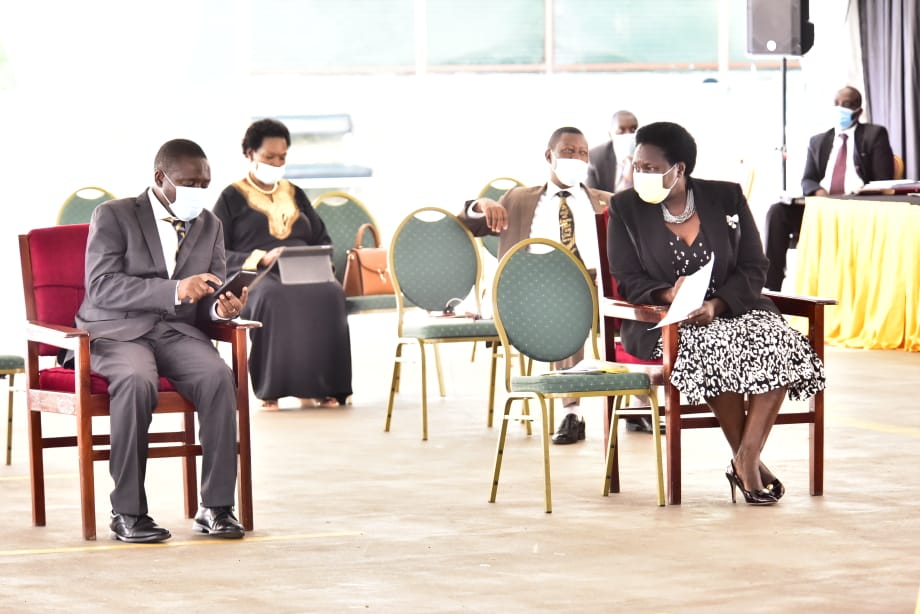
The President’s message was delivered by Lands Minister Judith Nabakooba during the installation of His Eminence Nektarios Lubega as the first Metropolitan of the newly established Holy Metropolis of Mityana.
“Preaching alone is not enough. Religious leaders should also be champions of development and uplift the communities they serve,” Museveni said in a written statement. He commended the Orthodox Church for its contribution to education, healthcare, and social welfare.
The inauguration ceremony, held at the Cathedral of St. Nektarios on Mount Sinai Kawanga Hill, marked a significant transformation of what was a forested area just four years ago. Under Metropolitan Nektarios’s leadership, the site now hosts a church, a primary school, and several community facilities.
“What you see today is a testament to faith, unity, and purpose,” Nektarios said. “This is not my personal triumph, but a collective achievement.”
The ceremony was presided over by His Beatitude Metropolitan Gregory of Boston, president of the Holy Synod of America, who urged Nektarios to lead with humility and dedication.
As part of his vision, Metropolitan Nektarios announced plans to construct a hospital to provide free healthcare to underserved communities. Minister Nabakooba officiated the groundbreaking ceremony and praised the Orthodox Church’s efforts as a model of “faith in action.”
“We urge other religious institutions to follow your lead,” she said. “From schools to hospitals, you are directly contributing to Uganda’s development.”
Nektarios also revealed plans for a “House of Healing” to support the elderly, orphans, and the sick, and thanked the President for upholding religious freedom in Uganda.
The event drew local and international dignitaries and highlighted the growing role of faith-based institutions in addressing poverty, health gaps, and education challenges in rural Uganda.